There is a long-standing belief in interior design that maximalism must arrive drenched in colour. That abundance needs jewel tones, layered prints, dramatic contrasts and rooms that announce themselves loudly. White, meanwhile, has long been assigned the opposite role. Minimal. Restrained. Quiet to the point of absence.
This home in Delhi’s posh Shantiniketan turns that assumption on its head!
Spread across 3500 square feet, the residence asks a compelling question: can a stark white palette still feel richly expressive? The answer unfolds slowly through its rooms, where texture replaces colour, objects become emotional markers, and restraint is used not to empty a space, but to heighten everything within it. Designed with Natelier by Bent Chair’s Boho Bliss collection, the home does not chase the conventional language of maximalism. Instead, it builds a softer, more tactile version of it, and which becomes more grand than any regular bold design.
A Home Built Through Texture
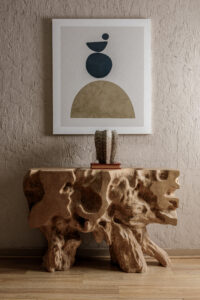
The first impression is almost meditative. White walls absorb the changing light through the day, becoming warm in the afternoon and silvery by dusk. But the calmness is deceptive. Look closer, and the layering begins to reveal itself. Handcrafted details sit beside sculptural furniture. Earthy materials interrupt smooth surfaces. Woven textures soften architectural lines. The home is full of detail, yet nothing feels crowded.
That is perhaps the most difficult balance to achieve in maximalist interiors. Not excess for the sake of excess, but richness with rhythm.
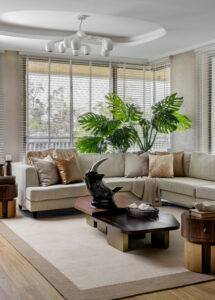
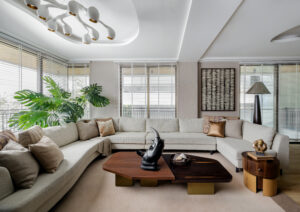
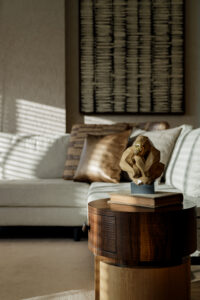
At the centre of the living room is a dramatic rock veneer panel that anchors the media unit like an art installation. Against the pale backdrop, its rugged texture becomes almost monumental. The space around it is intentionally relaxed. A plush neutral-toned sofa stretches low and inviting, while cane detailing, macramé accents and woven lighting introduce an ease that feels deeply lived-in rather than styled for effect.
The room resists perfection in the best way possible. Ceramics are casually layered across surfaces. Rugs overlap gently underfoot. Cushions in tonal fabrics create softness without relying on bold colour. Even the lighting contributes to the atmosphere, diffused and warm, casting gentle shadows that make the whites feel dimensional rather than flat.
What emerges is a form of maximalism built not through visual noise, but through sensory depth.
Dining Designed for Slow Living
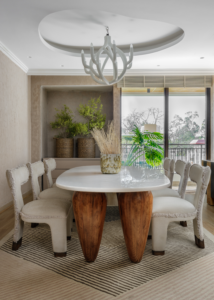
The dining area continues this language with remarkable fluidity. Anchored by a warm wooden dining table and curved chairs, the space feels intimate despite its openness. The palette remains restrained, yet the room carries a strong emotional warmth through material choices alone. Earthy finishes, handcrafted décor and softly glowing statement lighting turn the act of dining into something slower and more deliberate
.
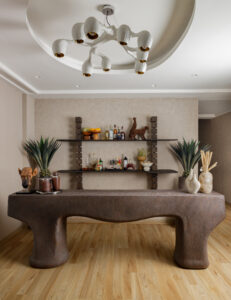
There is also a natural generosity to the layout. The dining area flows seamlessly into the adjoining bar, allowing the home to shift easily between quiet evenings and larger gatherings. Nothing feels rigidly separated. Spaces expand into one another organically, much like conversation itself. The bar is perhaps the moodiest corner of the house. Tucked beside the dining area, it feels cocooned and atmospheric without becoming overly dramatic. Arch-framed glass shutters bring architectural softness, while dark wood finishes ground the space beautifully against the home’s otherwise pale palette. Ambient lighting glows against warm metallic accents, creating an environment designed less for entertaining and more for lingering.
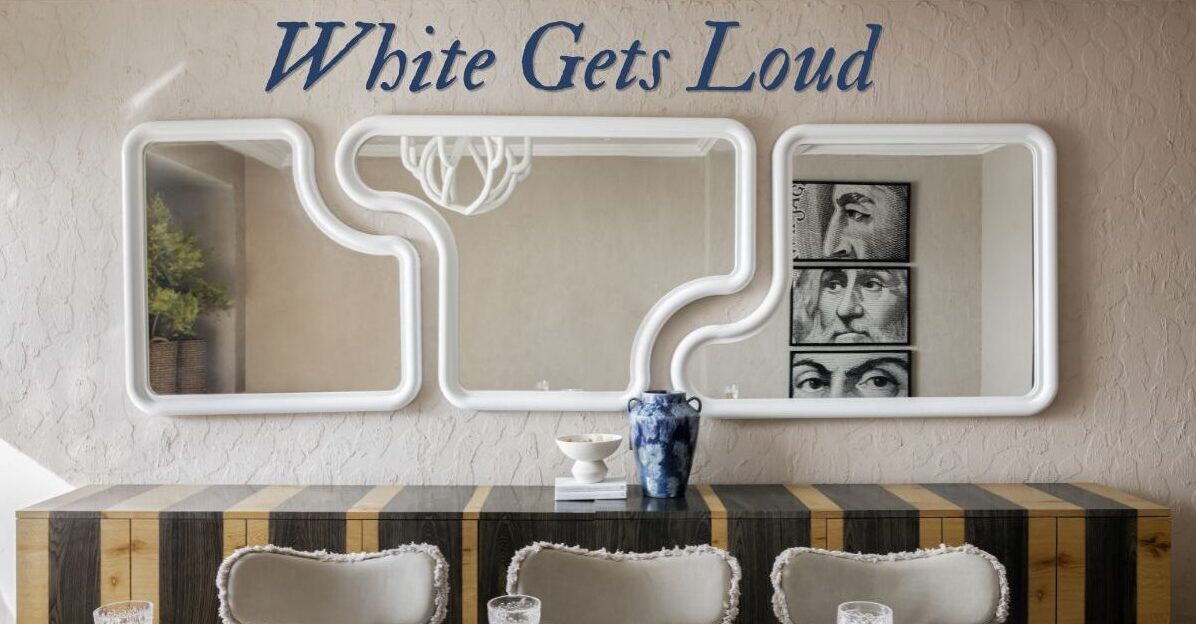
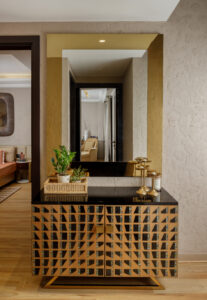
It is here that the project’s central idea becomes clearest. White does not erase character. It sharpens it. Without colour competing for attention, materials are allowed to speak fully. Grain, weave, stone, wood and fabric become the visual language of the home. Every texture feels amplified. Every object carries more presence.
Bedrooms that Feel Softly Layered
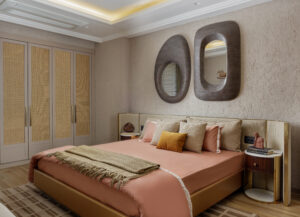
The master bedroom embraces this philosophy with a gentler rhythm. Soft fabrics, muted layers and low lighting create a space that immediately slows the body down. The room feels deeply personal without relying on decorative excess. The palette remains quiet, but the layering is meticulous. Upholstered surfaces meet natural textures. Light pools softly across the room rather than flooding it.
Even the walk-in closet maintains the same emotional continuity. Storage is integrated seamlessly into the design rather than treated as a purely functional addition. The result is a sense of calm that never feels clinical.
In contrast, the guest bedroom introduces slightly deeper tones and playful prints while still remaining connected to the home’s overall bohemian language. It feels intimate, cocoon-like and quietly expressive. A reminder that maximalism often lies in personality more than palette.
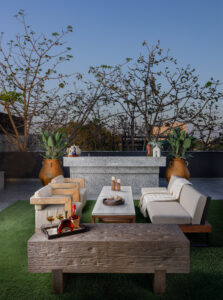
Then there is the terrace, where the house exhales completely. Filled with rattan furniture and lush greenery, the outdoor space feels sun-washed and effortless. Mornings here would likely begin slowly, with filtered light falling across textured surfaces and leaves moving gently in the breeze. By evening, the terrace transforms into something softer and more atmospheric. A place for pauses rather than performance.
It extends the spirit of the interiors beautifully. Relaxed, tactile and deeply connected to feeling.
Redefining Maximalism
What makes this Shantiniketan residence so compelling is not simply its aesthetic direction, but the confidence behind it. In a moment when maximalism is often interpreted through louder palettes and visual intensity, this home chooses subtlety instead. It proves that abundance can exist in texture, in craftsmanship, in layering and in emotional resonance.
Natelier by Bent Chair has approached the project less like a furnishing exercise and more like storytelling through space. The result is a home that feels soulful rather than styled. One where utility and expression dissolve into each other naturally.
Perhaps that is the real lesson: white was never the opposite of maximalism, it simply demanded a more thoughtful approach!