KOLKATA
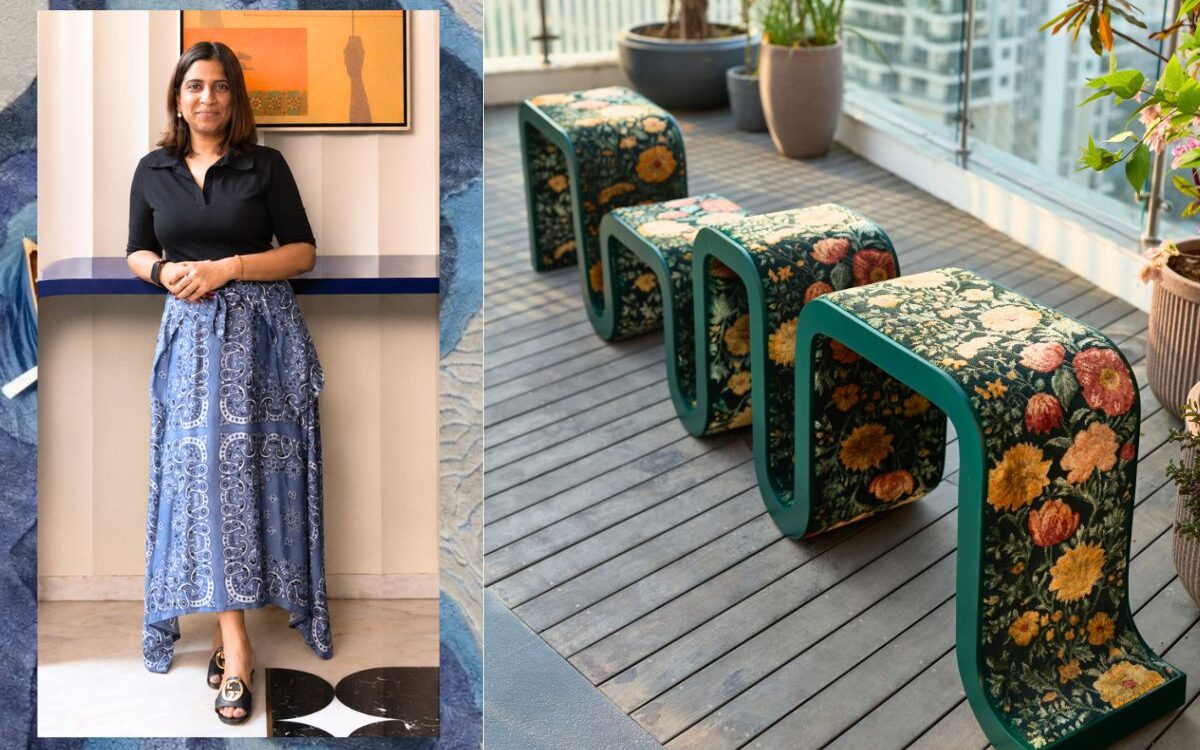
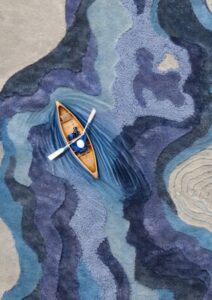
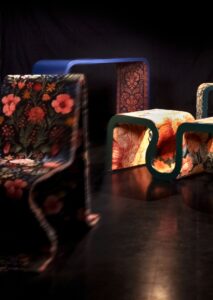
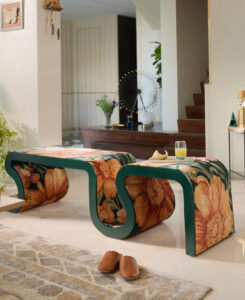
The most unexpected thing about a carpet from Carpet Couture by Rashi might be where you find it. Suspended from a ceiling, occupying an entire wall or assuming the contours of a piece of furniture, it defies the familiar understanding of a furnishing that has spent centuries underfoot. Founder Rashi Bajaj sees no reason why the floor should have exclusive rights to the beauty of a handwoven carpet.
For Bajaj, this creative rebellion has deeply personal beginnings. Growing up in Bhadohi, India’s celebrated carpet-making town, she inherited a family legacy spanning nearly five decades. The workings of a loom, the behaviour of yarn and the dexterity of experienced weavers were part of her everyday surroundings. Fifteen years into establishing her own brand, that familiarity has become the foundation for some decidedly unconventional design experiments.
Her approach is perhaps best understood through the brand’s creative philosophy, Limitless. Rather than confining weaving to conventional formats, Bajaj investigates its potential as a medium for artistic expression. Folklore finds its way into elaborate woven compositions, while adventurous colour combinations and sculptural textures give traditional techniques a surprisingly modern vocabulary.
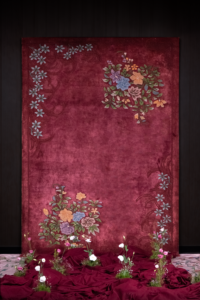
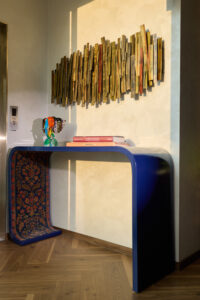
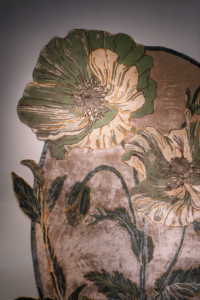
There is something particularly fascinating about the transformation of a soft, pliable material into sculptural furniture and ceiling installations. It demands a different understanding of proportion, texture and construction, pushing both the designer and the weaver to reconsider the possibilities of their medium.
Working with some of the country’s largest looms, the brand also enjoys considerable freedom in scale. Collaborations between artists, designers and artisans allow ideas to develop across disciplines, with the weaver contributing as much to the creative process as the person conceiving the design.
Bespoke commissions introduce another dimension. A carpet can be developed around the proportions of a particular room, the colours of a cherished artwork or the homeowner’s individual aesthetic preferences. Clients become involved in its conception, allowing the finished piece to acquire a distinctly personal character.
Despite these contemporary explorations, the brand’s identity remains inseparable from Bhadohi and its community of weavers. Their accumulated knowledge of yarn, tension, knots and colour makes such experimentation possible. In an increasingly automated design industry, their judgement and manual dexterity remain invaluable.
Carpet Couture by Rashi makes a compelling argument for reconsidering the hierarchy of decorative arts within the home. A handwoven carpet deserves the same discerning eye that one brings to acquiring a painting or a sculpture.
And perhaps the next time you encounter an exceptional carpet, you might find yourself wondering whether it deserves a place on the floor at all.