KOLKATA
The stage is set. Moody blacks slip into the background, magentas turn up the drama, while whites, pale pinks and flashes of gold walk in like they own the room.
Some homes whisper elegance. This Jaipur residence prefers a grand entrance. Designed by PS Design, the 3,000 square foot Sanganeria Residence unfolds like a beautifully staged performance where colour takes the lead role in every scene. Here, shades are not merely decorative choices pinned onto walls and furniture. They dictate mood, shift atmosphere and create moments of tension, softness and surprise. The result is a home that feels expressive, deeply personal and unapologetically alive.
Originally planned as a five-bedroom apartment, the layout was transformed into a four-bedroom residence to allow the spaces to breathe. That single decision changed the emotional scale of the home entirely. Instead of tightly arranged rooms, the interiors now move with ease, creating long visual moments, dramatic pauses and carefully framed transitions.
The first hint of this theatrical instinct appears right at the entrance.
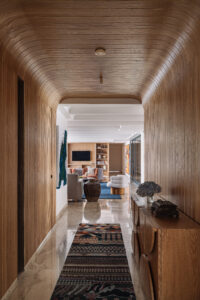
The foyer does not simply guide you inside. It prepares you for what is coming next. Long wooden strips wrap across the walls and ceiling, curving softly at the corners so the entire passage feels sculpted rather than assembled. There is something cinematic about the way the lines pull you forward.
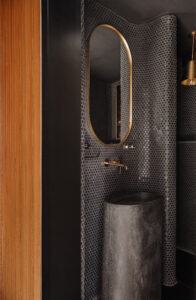
What makes the space even more striking is what it hides. The powder room and kitchen disappear discreetly behind louvered surfaces, leaving the eye uninterrupted. Nothing feels abrupt. Nothing competes for attention too early. It is restraint used strategically, like the quiet opening scene before the drama begins. And then the house opens up.
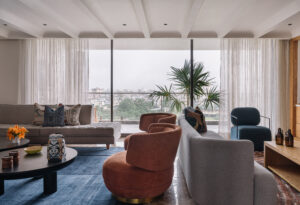
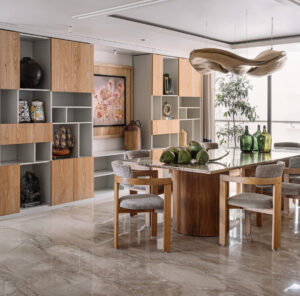
The living and dining spaces are anchored in pale tones, but there is nothing timid about them. The whites here are luminous rather than minimal. Gold details flash in carefully chosen moments. Soft blush undertones warm the room instead of cooling it down. The palette behaves almost like costume design, giving every material its own personality.
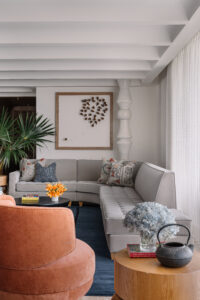
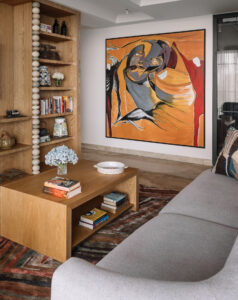
To the left, the living room splits into two emotional registers. One side feels composed and formal, arranged around a large L-shaped sofa. The other is looser and more intimate, centred around the television area where conversations can stretch into the evening.
A vaulted ceiling heightens the sense of scale, but the room avoids feeling imposing because of its curved furniture language. Rounded coffee tables, softened edges and fluid seating arrangements create movement throughout the space. Even the marble flooring participates in the performance, its dramatic veining adding texture like brushstrokes across a canvas.
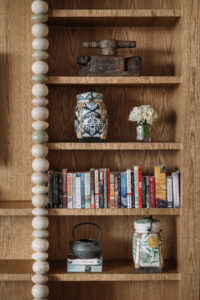
A single pillar introduces a subtle classical note into the otherwise contemporary setting. It feels deliberate, almost symbolic, as though the house is quietly acknowledging Jaipur’s layered architectural history without slipping into nostalgia.
Across the room, the dining area carries its own kind of drama. Above the table hangs a sculptural pendant light that behaves less like lighting and more like jewellery suspended mid-air. It anchors the room instantly.
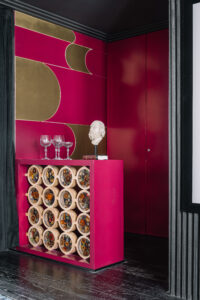
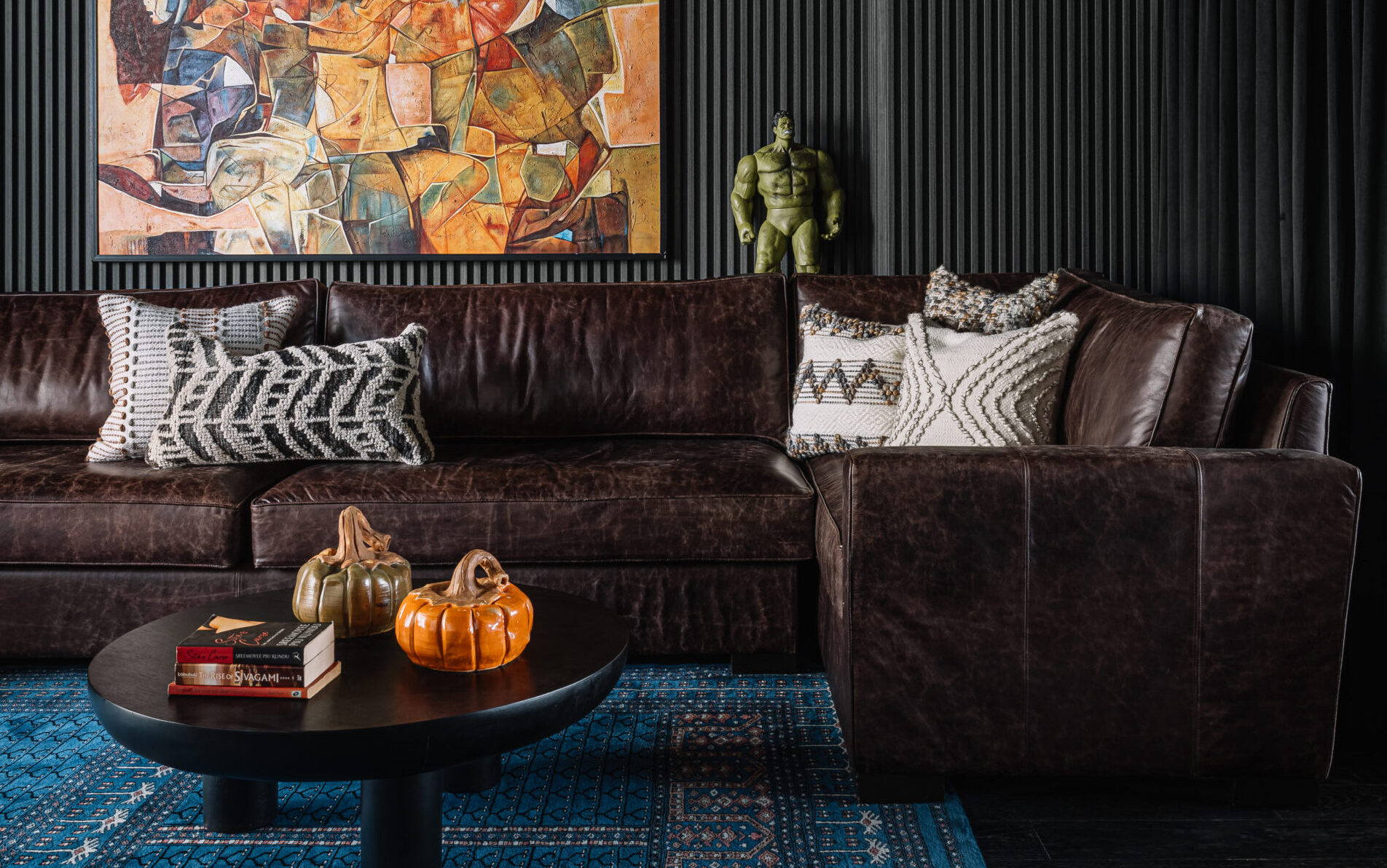
Then comes the den, and suddenly the house changes tempo. If the living spaces feel airy and composed, the den is where the shadows arrive. Deep greys wrap the walls in a cocoon-like atmosphere, while fluted panelling introduces rhythm and texture. The room feels cinematic in the way boutique hotel bars often do. Dimensional, immersive and slightly mysterious.
And then there is the fuchsia nook. Instead of hiding the bar away, the designers turned it into an object of fascination. The custom bar counter is embedded with resin compartments holding dried fruit slices, herbs, cinnamon sticks, corks and cans, transforming everyday bar essentials into visual artefacts. It is playful, tactile and slightly surreal. The kind of detail guests inevitably walk toward.
This room understands something many homes forget. Dark colours do not necessarily make a space feel smaller. When layered correctly, they create intimacy. They slow people down.
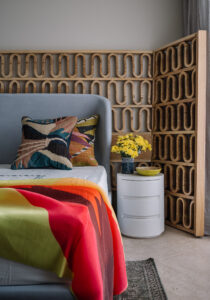
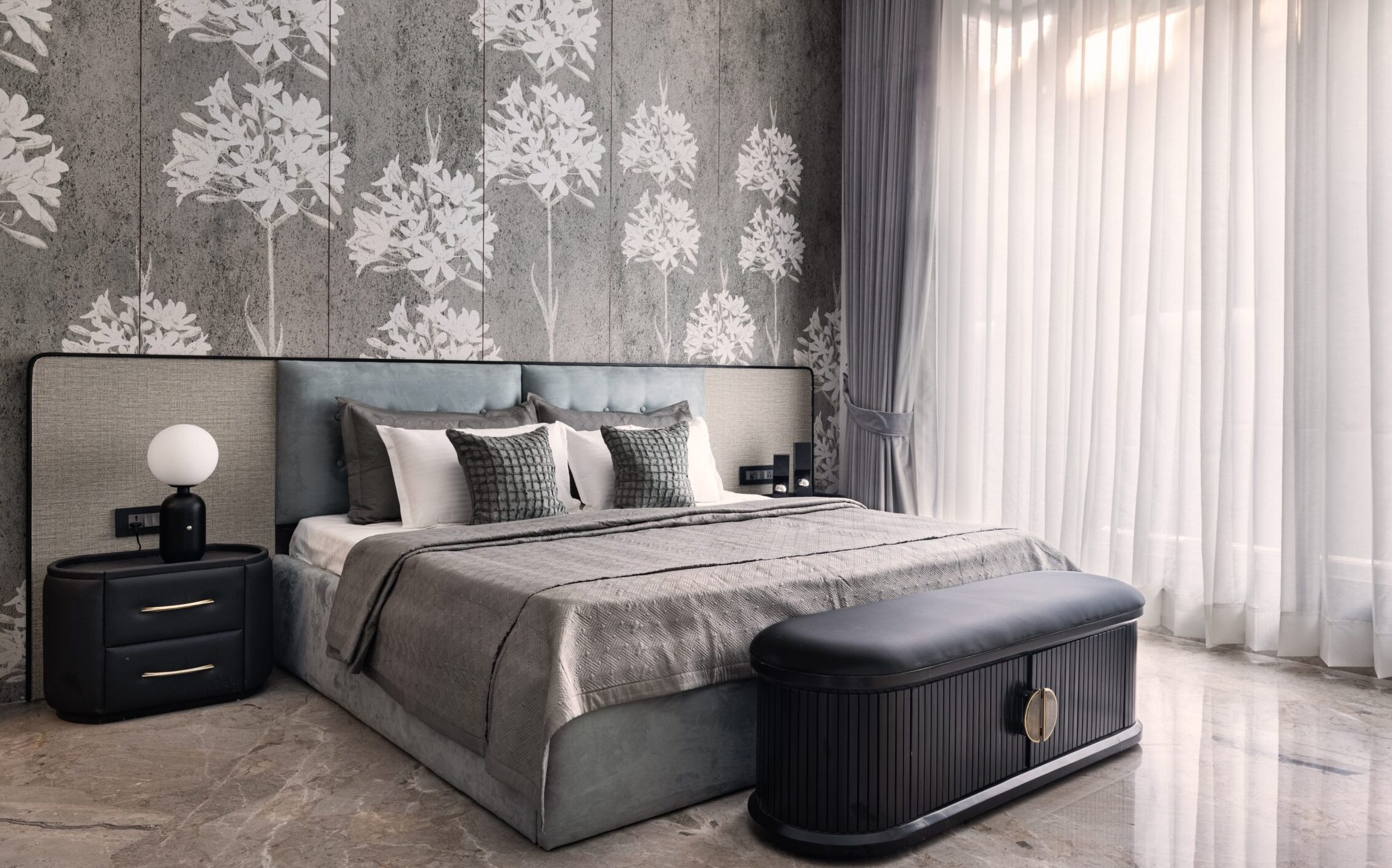
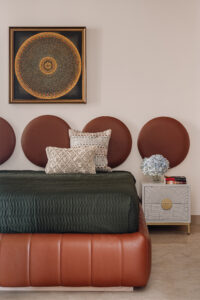
The private rooms avoid repetition entirely. Each one feels shaped around the people living inside it. In the parents’ bedroom, a sculptural wooden screen ripples behind the bed like a carved textile frozen in motion. It introduces warmth without heaviness and gives the room a handcrafted depth.
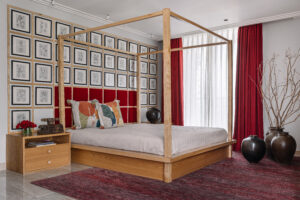
The master bedroom takes a softer route. A four-poster bed becomes the visual anchor, while framed botanical illustrations stretch across the wall behind it. The artwork was sourced from a book deeply loved by the homeowners, which gives the room emotional weight beyond aesthetics. Nothing feels selected for trend value alone. The personal history attached to the pieces changes the atmosphere completely.
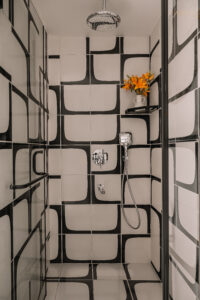
The children’s room shifts the energy again. Geometry, colour and playful forms take over. Twin study tables frame the entrance, while a cleverly designed bunk bed frees up the rest of the room for movement and play. Nearby, the Lego-inspired bathroom embraces imagination without becoming overly themed. It feels joyful instead of performative.
What makes this Jaipur residence memorable is not simply its colour palette. Plenty of homes use bold shades. Few understand how colour can control emotion with this much precision.
Here, magenta does not shout. Black does not overwhelm. White never fades into the background. Every tone enters at the right moment and leaves a lasting impression. The house understands that interiors, much like theatre, are really about atmosphere. About tension and softness. About when to hold back and when to take centre stage.
In this grand production, colour plays the lead beautifully.