KOLKATA
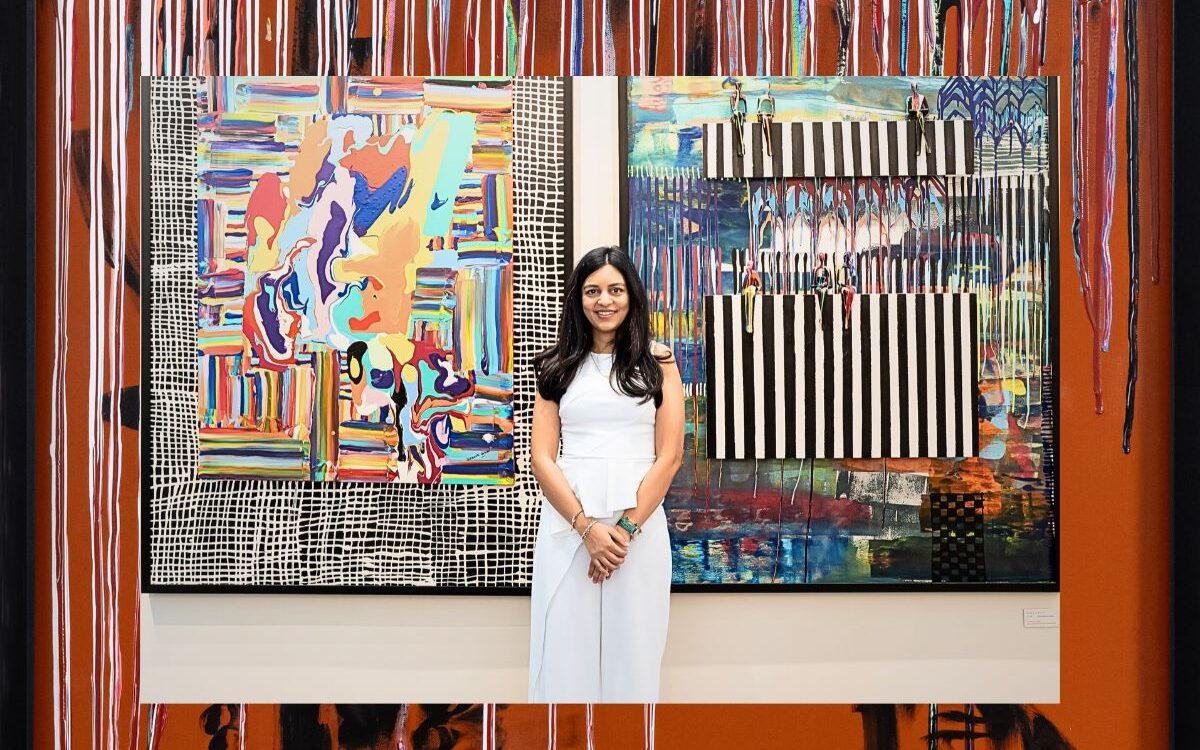
There is something deliciously ironic about an artist trained to find solutions who now finds beauty in mistakes. An accidental drip of paint becomes an essential part of a composition. An unexpected collision of colours dictates the direction of a work. Materials refuse to remain within the confines of a flat canvas. For Delhi-born contemporary artist Devanshi Goenka, relinquishing control has become one of her most interesting creative discoveries.
Goenka entered the art world remarkably young, holding her first solo exhibition in New Delhi in 2008, at sixteen. Her talent subsequently drew recognition from eminent artist Anjolie Ela Menon and curator Sharan Apparao. Today, one of her works belongs to the distinguished Akhoury Collection in New York, while two are displayed at the Goldman Sachs office in London.
Her journey, however, has been anything but conventional. An education at the Wharton School of the University of Pennsylvania, followed by a stint at McKinsey & Company and an entrepreneurial career in agri-tech, makes for an unusual artistic biography. Years spent understanding systems, solving problems and making calculated decisions have given her an interesting relationship with creative freedom.
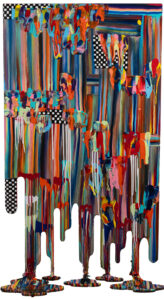
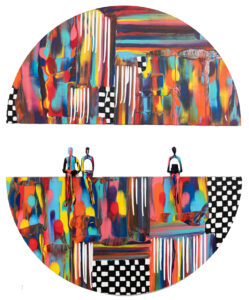
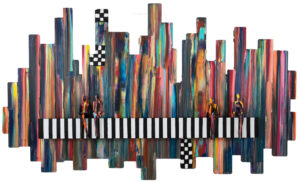
It is this contradiction that makes her series, Unfiltered, particularly compelling.
Conceived during a demanding period of balancing motherhood with running a business, the collection emerged from a deeply personal need to express emotions that had accumulated over time. The studio became a place where nothing needed to be explained, justified or neatly resolved.
Colour arrives with an almost infectious exuberance. Compositions acquire physical depth through unconventional materials and three-dimensional elements, inviting the eye to wander across their irregular surfaces. There is an appealing disregard for restraint, yet beneath the apparent abandon lies an instinctive understanding of balance and composition.
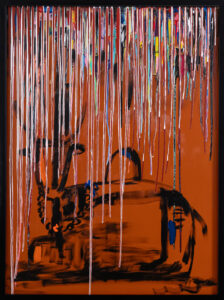
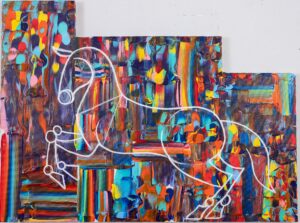
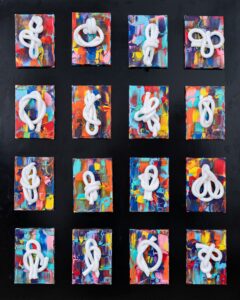
Within a home, such works possess an interesting ability to alter the emotional temperature of a room. Their exuberance can interrupt the formality of a carefully composed interior, introducing something spontaneous, intimate and wonderfully unpredictable. They demand little in the way of decorative accompaniment; their presence is sufficient.
What makes Goenka’s practice particularly refreshing is her willingness to leave evidence of uncertainty within the finished work. In a culture increasingly preoccupied with editing, correcting and presenting immaculate versions of ourselves, her art finds pleasure in the unresolved. Unfiltered is, ultimately, an invitation to experience joy without intellectualising it, to appreciate beauty without insisting upon perfection. And perhaps, occasionally, to colour outside the lines.