KOLKATA
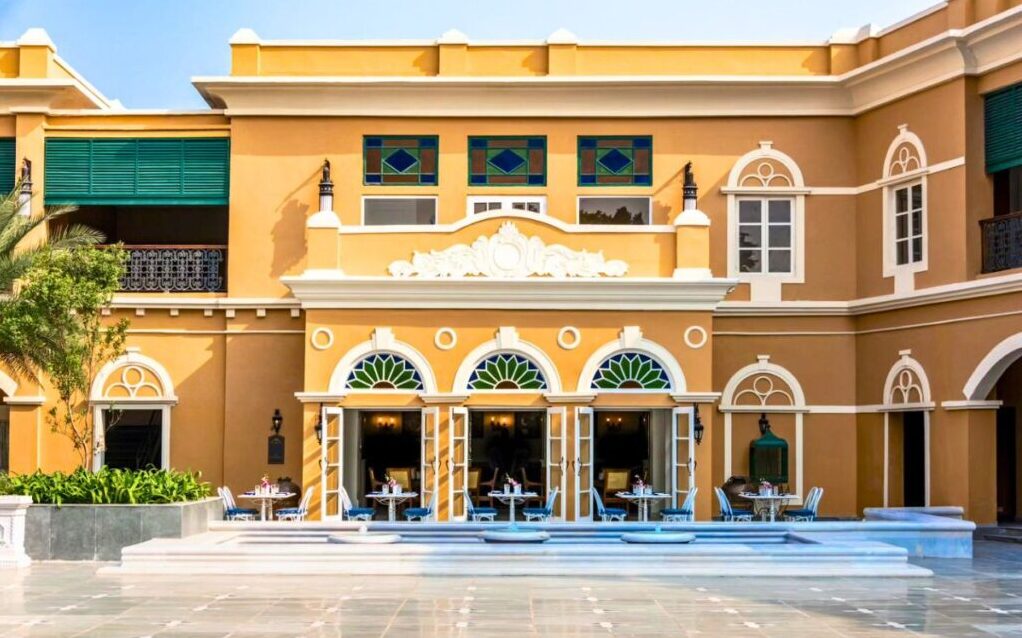
There are cities that learn to move on. And then there is Kolkata, holding its ground with a quiet, almost defiant grace. It keeps its green shuttered windows half open to the past, its fluted columns rising with an old-world certainty, its courtyards catching light the way memory catches time. In the shaded lanes of Bhawanipur, where cornices curl gently above and iron grilles trace delicate patterns against the sun, you understand this early. Bengal does not believe in erasure. It believes in accumulation. In the slow, careful act of layering one life over another until the walls begin to remember you.
Design here was never in a hurry. It lingered, it absorbed, it borrowed without losing itself. Greek restraint, Mughal balance, Victorian excess, all softened by damp air, filtered light, and the habits of those who lived within. Nothing feels imposed. Everything feels settled. These spaces do not reenact history for effect. They live inside it, quietly, without announcement. Walk through them and you begin to notice the unspoken rhythm. A staircase that curves without urgency. A verandah that stretches just enough to hold the afternoon. A courtyard that gathers the sky as if it has all the time in the world.
And if you look closely, that inheritance lives on in Bengal’s heritage hotels. Not as nostalgia, but as design that refuses to dilute itself. Here are the spaces where Victorian influence and Bengali sensibility collide, layer, and linger.
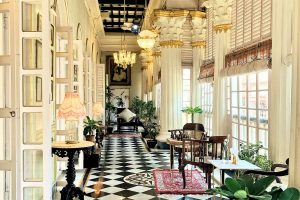
Columns rise with a kind of certainty you rarely see now. Greek in proportion, Roman in confidence, softened by French detailing. Ceilings are painted, not just finished. Mirrors stretch space until it feels theatrical. The Sheesh Mahal fractures light into smaller, shimmering fragments. Every surface is deliberate, but nothing feels restrained. It is excess held together by symmetry.


Here, design behaves like memory. One room carries the weight of cobblers, another echoes theatre, another stitches together the rhythm of tailoring. Tools become décor. Walls hold prints, shelves hold stories. The Victorian layer appears quietly in the Sahibpara room through old photographs, buggy lamps, and a certain colonial order. It is not staged. It feels accumulated.
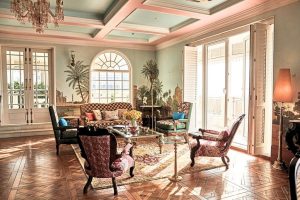
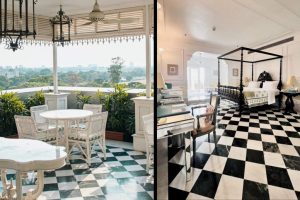
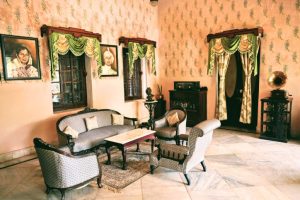
Pastels take over where heavy Victorian tones once dominated. Celadon, pale yellow, muted pink. But the bones remain colonial. Marble floors cool the space. Carpets soften movement. Hallways are elongated, almost processional. Art fills the walls, not as decoration, but as continuity.

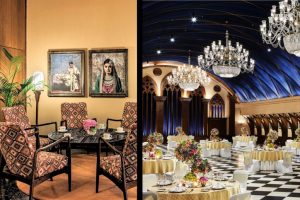
Courtyards anchor the entire experience. Open to the sky, yet enclosed by rhythm. Arches borrow from Indo Saracenic vocabulary, while details remain distinctly Bengali. Hand pulled fans, carved railings, a palanquin placed not as an object but as presence. It feels ceremonial without trying too hard.


High ceilings, deep verandahs, furniture that carries the weight of use. Nothing matches, yet everything belongs. Memorabilia sits alongside polished wood. The Victorian influence is not in any one piece, but in the way the space holds together.

Pointed arches meet local material. The structure leans into Gothic drama, but the climate softens it. Verandahs widen, openings expand. The result is less severe, more breathable.