KOLKATA
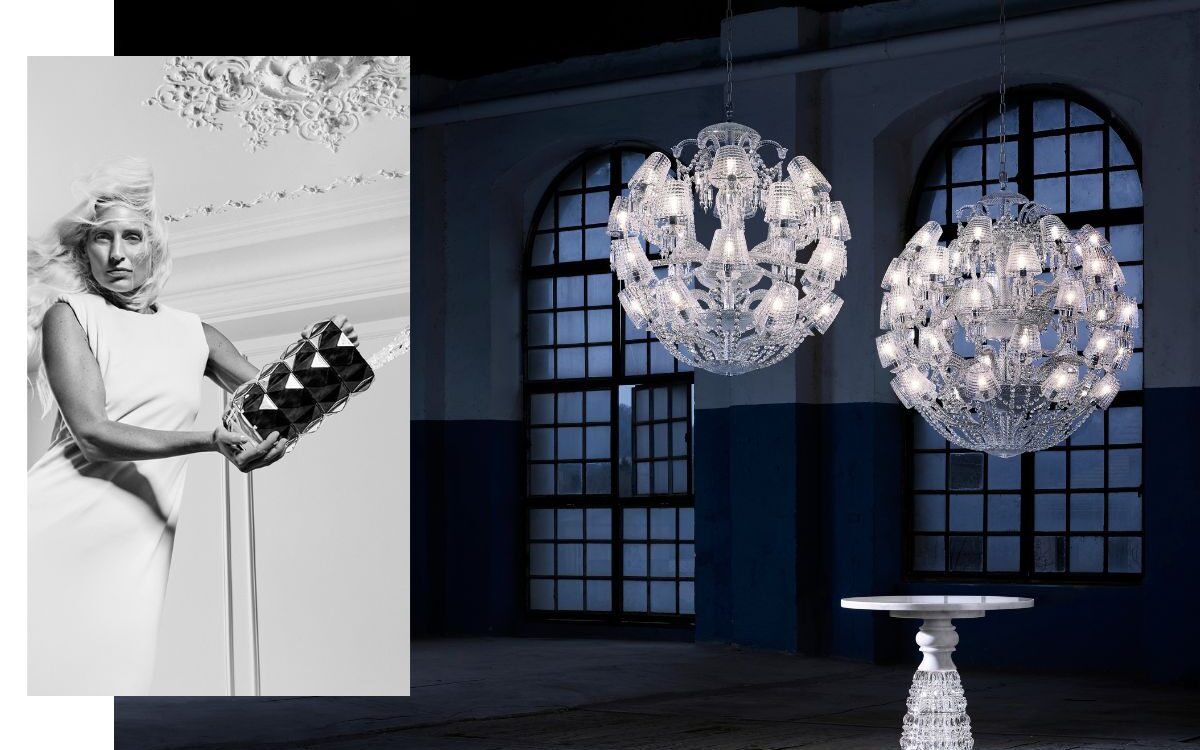
Crystal is not naturally cooperative. It begins in heat, demands exact temperatures, allows little hesitation and can undo hours of work in seconds. Perhaps that is why Baccarat has spent more than two and a half centuries trying to master it without ever making it look difficult.
The story begins in 1764 in Baccarat, a village in eastern France that gave the Maison its name. By 1816, its craftsmen had perfected a formula for crystal of exceptional purity. What followed was not simply the making of glasses, vases and chandeliers, but the development of an extraordinary vocabulary around a notoriously exacting material.
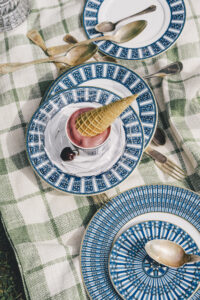
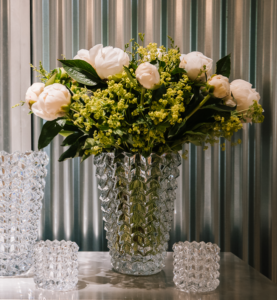
Inside the Maison, making is almost orchestral. Breath inflates molten crystal. Hands turn, cut, engrave and polish. Eyes judge what instruments cannot. A single piece may travel repeatedly between specialists before it is considered finished. Baccarat today preserves 50 skills connected directly to crystal making, with 14 Meilleurs Ouvriers de France among its artisans, the largest number held by a French luxury house. Its internal school passes these skills to a new generation.
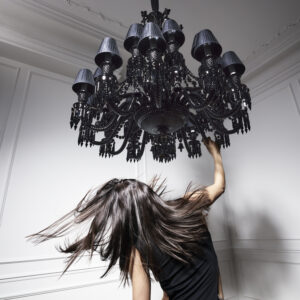
Tradition, however, has never meant standing still. Baccarat introduced chandelier elements as early as 1827 and coloured crystal in 1839. Later, Salvador Dalí, Ettore Sottsass, Michele De Lucchi, Philippe Starck, Patricia Urquiola and Virgil Abloh each brought a very different imagination to its workshops. The remarkable part is that Baccarat can accommodate surrealism, minimalism, extravagance and provocation without losing its accent.
India, too, has long been part of that creative conversation. Long before Baccarat opened its new flagship at The Chanakya, New Delhi, in 2025, its crystal had found its way into Indian royal households. The Maharajas of Kapurthala, Bikaner, Indore and Baroda commissioned crystal services, glassware, furnishings and decorative pieces for their palaces. These were not merely objects arriving from France. Taste travelled in both directions.
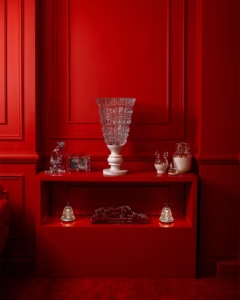
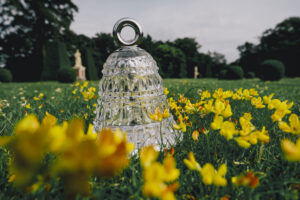
Indian culture, in turn, entered Baccarat’s imagination. It informed creations including the Ferrières furniture collection and the extraordinary Elephant Liquor Cabinet, presented at the Paris World Fair in 1878. The exchange between French crystal making and Indian decorative culture was already underway more than a century before contemporary luxury became global shorthand.
The opening at The Chanakya therefore feels less like an introduction than a return. It places Baccarat once again within an Indian conversation about entertaining, collecting, gifting and living with beautifully made things.
Today, Baccarat’s world stretches from Paris to Tokyo, New York, Seoul, Dubai, Hong Kong and now its New Delhi address, expressed through boutiques, maisons, hotels, restaurants and bars. Yet every elaborate creation still begins with something almost primitive. After more than 260 years, Baccarat continues to prove that the most sophisticated objects can begin with the simplest elements.