KOLKATA
There are easier places to build an art centre. Ambica Beri chose a village where the road to contemporary art passes through temples, forests, music and memory. Deep in Madhya Pradesh, Ichol sits somewhere between the temple spires of Khajuraho and the forests of Bandhavgarh, just outside the old temple town of Maihar. The sacred and the artistic have long shared this landscape. It was here that Ustad Allauddin Khan, who came to Maihar as a court musician, established what came to be known as the Maihar Gharana. Ravi Shankar studied under him here, Annapurna Devi was his daughter and Ali Akbar Khan his son.
For Beri, then, Maihar was never an unlikely location for an art centre. It was already a second home, layered with family history and this extraordinary musical past. Long before Art Ichol had studios, a sculpture park or artists arriving from different parts of the world, artists were already finding their way here.
In 1997, artist Bikash Bhattacharjee arrived. Others followed. There was no formal residency programme, no carefully constructed calendar and no expectation of what they should produce. They came, stayed, worked and allowed the place to enter their practice.
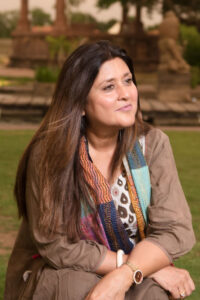
“Art Ichol actually grew organically out of that relationship,” says Beri, who had already established a gallery in Kolkata. “It wasn’t just about making an institution. There was a deeper reason.”
That reason had much to do with taking art beyond the gallery and placing it within a landscape where a very different audience could encounter it. “In galleries, art is confined to a very limited audience. Here, I was taking it out to the common man,” she says. And perhaps that is the most important distinction. Art Ichol was not an art centre that happened to be built in a village. The village, its music, materials, craftspeople, fields, brickmakers, local traditions and accumulated histories slowly became part of the art itself.
Moving between a Kolkata gallery and rural Madhya Pradesh altered Beri’s understanding of what it meant to support an artist.
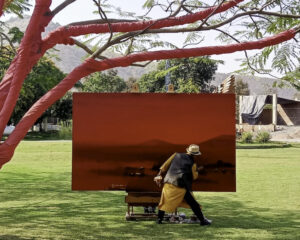
“The whole journey was from the familiar to the unknown,” she says. “In a gallery, the focus is naturally on the artwork, the exhibition, the audience. At Art Ichol, I began to see that the artist and the process were equally important.”
Space became a form of patronage. So did time. A ceramic studio came first. Then a bronze foundry, stone-sculpting facilities and a graphic studio. Instead of asking what an artist could exhibit, Ichol began asking what an artist might make if given the freedom, tools and landscape to experiment.
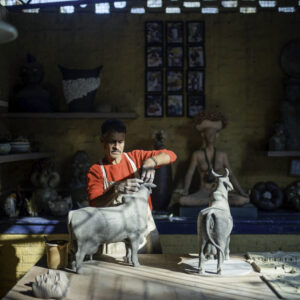
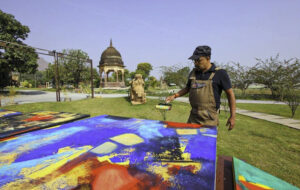
“Supporting art is not only about buying art or exhibiting art,” Beri says. “It could also mean creating an environment or condition where creativity can flourish.”
Perhaps the most remarkable consequence has happened beyond the visiting artists. Local people who may never have imagined art as a profession have found their way into these workshops. Beri speaks of a farmer who became an accomplished ceramic artist, travelled to China for a residency and was invited by the Australian government to exhibit.
“There is so much that is dormant. They don’t even know that they can be artists because there is no exposure to art in this area.” At Ichol, welding, carpentry, bronze casting and ceramics can become another vocabulary, and occasionally, another livelihood.
The sculpture park grew from a practical frustration. Galleries rarely have the physical space required for monumental work. Sculptors consequently reduce ideas into maquettes, not always because they want to work small, but because scale comes with logistical limits.
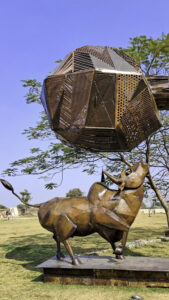
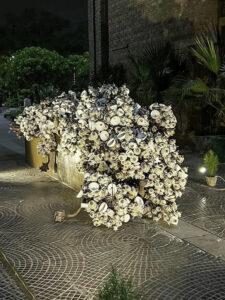
Beri wanted to remove that limit. “Let me give them the scale, let me give them the space and allow them to create in any scale,” she recalls.
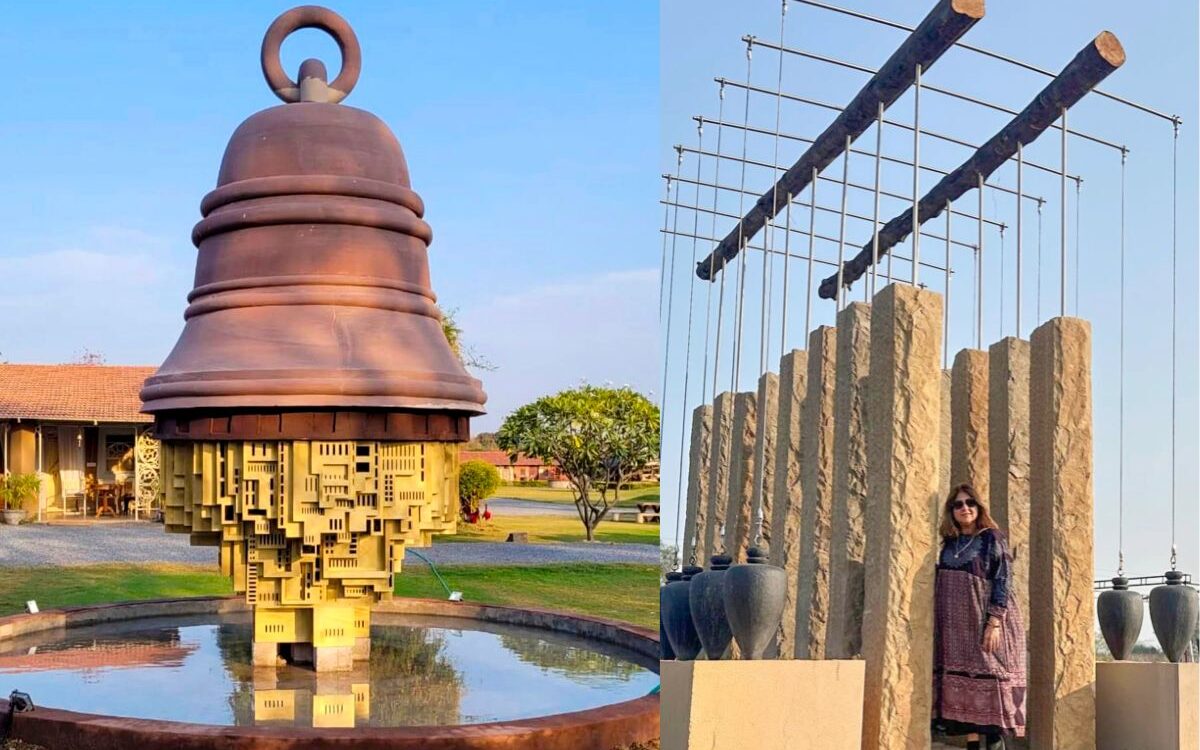
Today, works by artists including Paresh Maity, Satish Gupta, Gigi Scaria, Karl Antao, Arunkumar H G, Benitha Perciyal, Veer Munshi and Jagannath Panda contribute to a park that Beri is steadily developing into a serious record of contemporary sculpture.
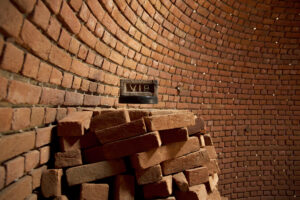
The landscape, however, is never merely an address. Swiss artist Jacques Kaufmann looked at the brickmakers around Ichol and responded with a brick temple, its final homage a single suspended brick. International artists have picked up on lime, local stone and details painted or formed on village houses.
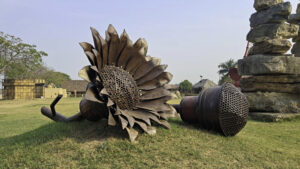
“The work has to be site-specific,” Beri explains. “I want the sculpture to become part of it. It should not look as though it has been artificially placed there.”
This is art allowed to weather rather than being protected from time. Sunlight shifts across it. Plants grow around it. Surfaces acquire age. The landscape gets a vote.
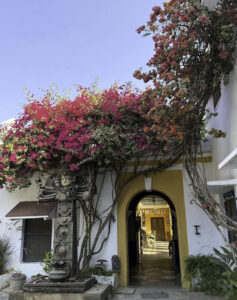
That respect for time extends to Beri’s restoration of the family’s century-old Maihar home. “For me, memory is very important,” she says.
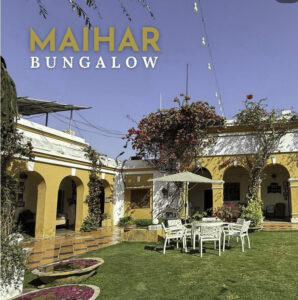
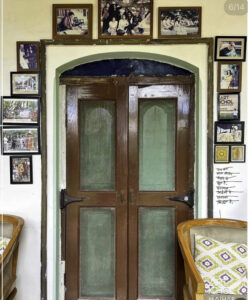
Restoration, therefore, was never going to mean scrubbing away age until everything looked newly built. The limestone character remained. Stone stayed visible. Old photographs returned to the walls. The kitchen and its fireplace survived, as did the fireplace in the dining room. Modern bathrooms and air-conditioning were introduced quietly, without asking the old house to pretend it belonged to another century.
“I didn’t want to erase anything. Neither did I want something to be very perfect and new.” She calls it a “living museum”, and the phrase feels particularly apt. Photographs of artists who have passed through Maihar since the 1990s sit alongside traces of family and industrial history. The past has not been roped off. People continue to sleep, eat, talk and make memories among it.
The same resistance to erasure shapes Beri’s thoughts on contemporary Indian design. For her, looking Indian does not require announcing India through a recognisable motif.
“We need to respond to something which is Indian in a contemporary way, which may not look Indian at first glance,” she says. “It should come from our context, our sensibilities and our way of living.”
At Ichol, this idea plays out almost literally. An artist based in Singapore saw cow-dung uplas drying on village walls and translated their forms into porcelain. Australian textile artists Trish Bygott and Nathan Crotty wandered through neighbouring villages, studying motifs on homes before reinterpreting them through embroidery. Those observations travelled further, eventually entering a project teaching prisoners to weave motifs into the black-and-white blankets they made.
Bricks, lime, birds, domestic markings, a wall in a village: none was presented as an official symbol of India. Yet each became unmistakably connected to place. “Indian identity should be evolving,” Beri says. “We should not try to make everything look Indian.”
Ask Beri what comes next and the answer is refreshingly free of expansion plans. “I’m not really looking at it as the next chapter. My intention is not to make it bigger. I just want to do small things.”
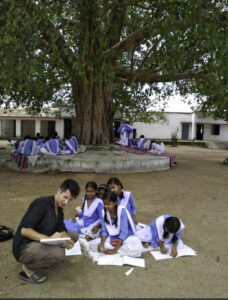
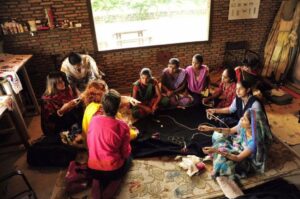
Those small things are deceptively ambitious. She wants to revive Bagheli cuisine, a regional food tradition she fears is disappearing. Visiting artists spend time with schoolchildren, teaching anything from music to embroidery. Skill development continues with the local community. Art, food and music are being drawn closer together.
Perhaps that is why Art Ichol remains difficult to categorise. It is a residency, workshop, sculpture park, homestay, classroom and archive, yet none of those descriptions quite contains it. Beri herself resists declaring it finished. “The journey is still continuing. It’s not complete.”