KOLKATA
There is a certain irony in the way sustainability is discussed today. The word appears everywhere, attached to luxury towers, glossy retail spaces and products wrapped in layers of branding. Yet the most enduring examples of sustainable design rarely announce themselves. They simply belong. To the land, the weather, the habits of the people living within them. They age quietly, work efficiently and feel inevitable in their surroundings.
Perhaps that is why the conversation around contextual architecture feels more urgent than ever. Not as a debate against sustainability, but as a reminder that the two were never separate ideas to begin with.


Long before sustainability became an industry term, architecture across the subcontinent was already responding instinctively to climate, geography and available resources. Thick stone walls in desert regions, shaded verandahs in humid climates, lime plaster that allowed buildings to breathe, courtyards that created natural ventilation. None of these gestures were designed to impress. They existed because they made sense.
Today, that instinct often competes with aesthetics driven by speed, aspiration and image culture. Materials travel across continents to create a particular finish. Interiors are redesigned every few years. Retail spaces are built for short lifespans. Homes are expected to perform visually before they perform environmentally. And yet, somewhere beneath the polished surfaces, the central question remains surprisingly simple: can a space continue to make sense long after the photographs are taken?
The answer lies less in labels and more in responsibility.

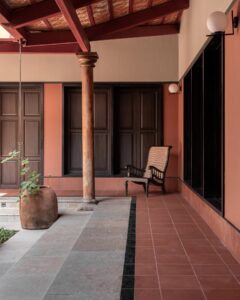
A building designed for six days cannot be approached in the same way as one designed for sixty years. Sustainability shifts according to lifespan, purpose and context. A temporary pavilion may prioritise dismantling and reuse. A restaurant may require materials that can survive years of heavy use. A family home may demand longevity above all else. There is no singular formula that can flatten these realities into one neat definition.
This complexity becomes especially visible in interiors. Unlike architecture, interiors often operate within tighter aesthetic expectations. Clients may desire Italian marble, polished steel or large expanses of glass because these materials communicate a certain language of luxury. Rejecting them entirely is not always realistic. The more meaningful question is what happens to those materials later. Can they be dismantled responsibly? Can they be reused? Can a high-performance alternative achieve similar longevity with less waste?
The conversation around sustainability tends to become reductive when materials are divided too cleanly into good and bad categories. A locally sourced material that needs replacement every few years may ultimately consume more energy over its lifetime than a durable material transported from elsewhere. Longevity matters. Maintenance matters. Operational life matters. The environmental cost of constant replacement is often ignored because it is less visible than the material itself.
What emerges instead is a more nuanced understanding of sustainability, one that is deeply tied to context rather than ideology.
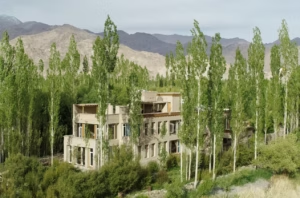
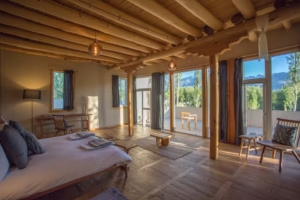
Few places demonstrate this more clearly than Ladakh, where architecture is shaped by necessity before aesthetics. In a cold desert climate with dramatic temperature shifts, buildings cannot afford to ignore the environment around them. South-facing facades capture solar heat during the day. Thick walls store warmth and release it slowly at night. Northern exposures are minimised to prevent heat loss. Construction techniques draw from vernacular knowledge refined over generations.
In such landscapes, sustainability is not an added layer. It is survival. The challenge becomes more complicated in cities with relatively neutral climates, where urgency disappears and architecture begins relying more heavily on visual language than environmental response. Here, sustainability can easily slip into performance. Green walls, certifications and technical jargon often create the appearance of responsibility without fundamentally changing how buildings behave.
This is where the idea of contextuality becomes critical. Context is not only climatic. It is also cultural, social and economic. A material appropriate in one region may feel disconnected in another. A technology celebrated globally may make little sense locally. Architecture cannot be separated from the realities of the place it occupies.
There is also something distinctly Indian about this conversation that often gets overlooked. Much of what is now marketed as sustainable living once existed naturally within everyday life. Using only the rooms needed during the day. Maximising daylight before switching on lights. Repairing instead of replacing. Building with restraint rather than excess. These were not environmental movements. They were habits.


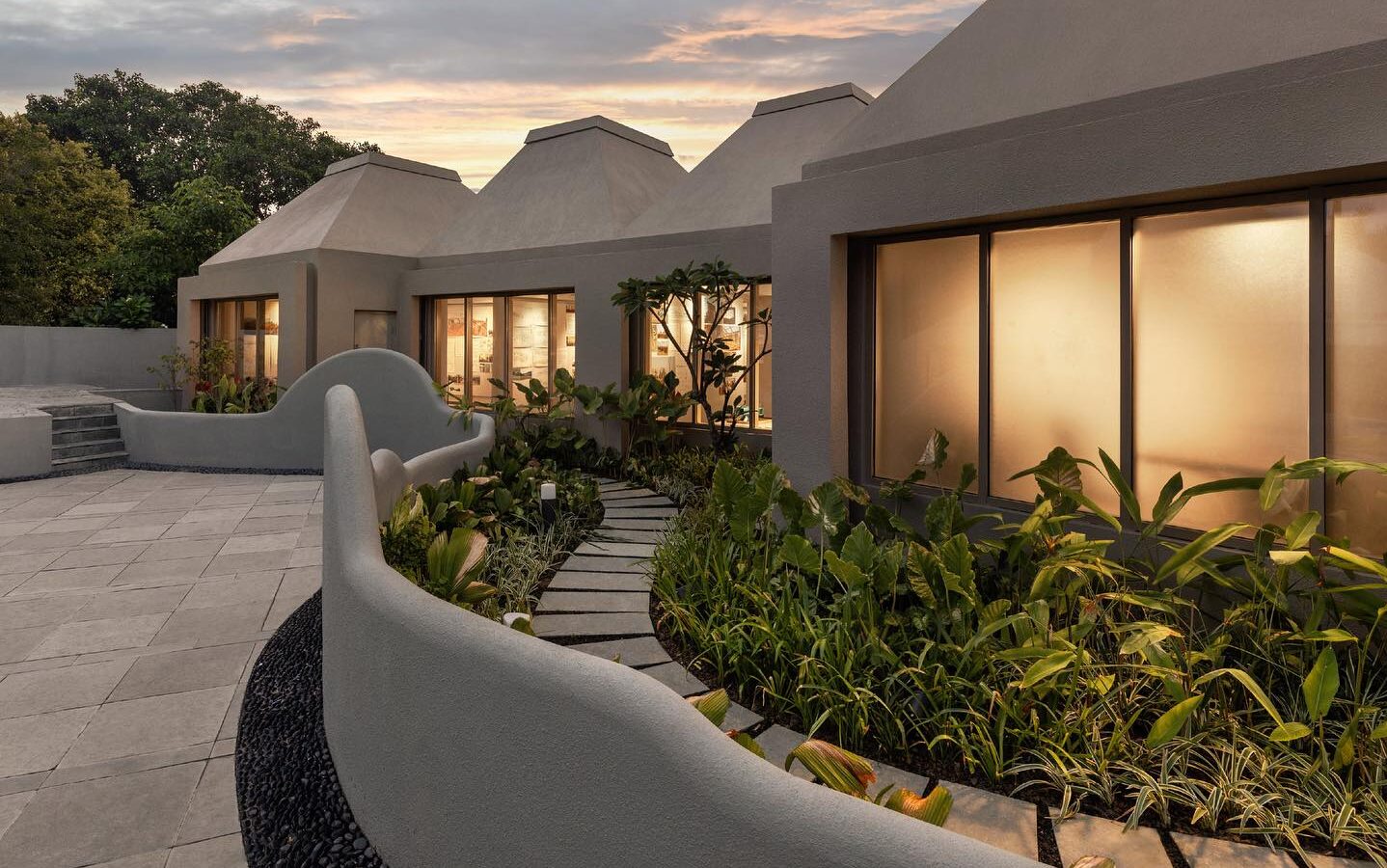
Modern design has slowly drifted away from these instincts in pursuit of aspiration. Yet there is a quiet return happening now. Not towards nostalgia, but towards intelligence. Exposed brick, lime plaster, local stone and handmade surfaces are reappearing not because they look rustic, but because they create spaces with depth, thermal comfort and material honesty. Even luxury is beginning to shift away from overt display towards permanence and tactility.
The most compelling spaces today are often the ones that do not overstate themselves. They understand light. They understand the weather. They understand how people move, gather and rest. They avoid unnecessary intervention. They allow materials to age naturally. And perhaps most importantly, they recognise that sustainability is not achieved through one heroic gesture, but through hundreds of small decisions made carefully over time. In the end, contextual architecture may simply be architecture that pays attention. Attention to climate, lifespan, culture, labour, maintenance and memory. Because truly sustainable spaces rarely begin with the ambition to appear sustainable. They begin with the desire to belong.