KOLKATA
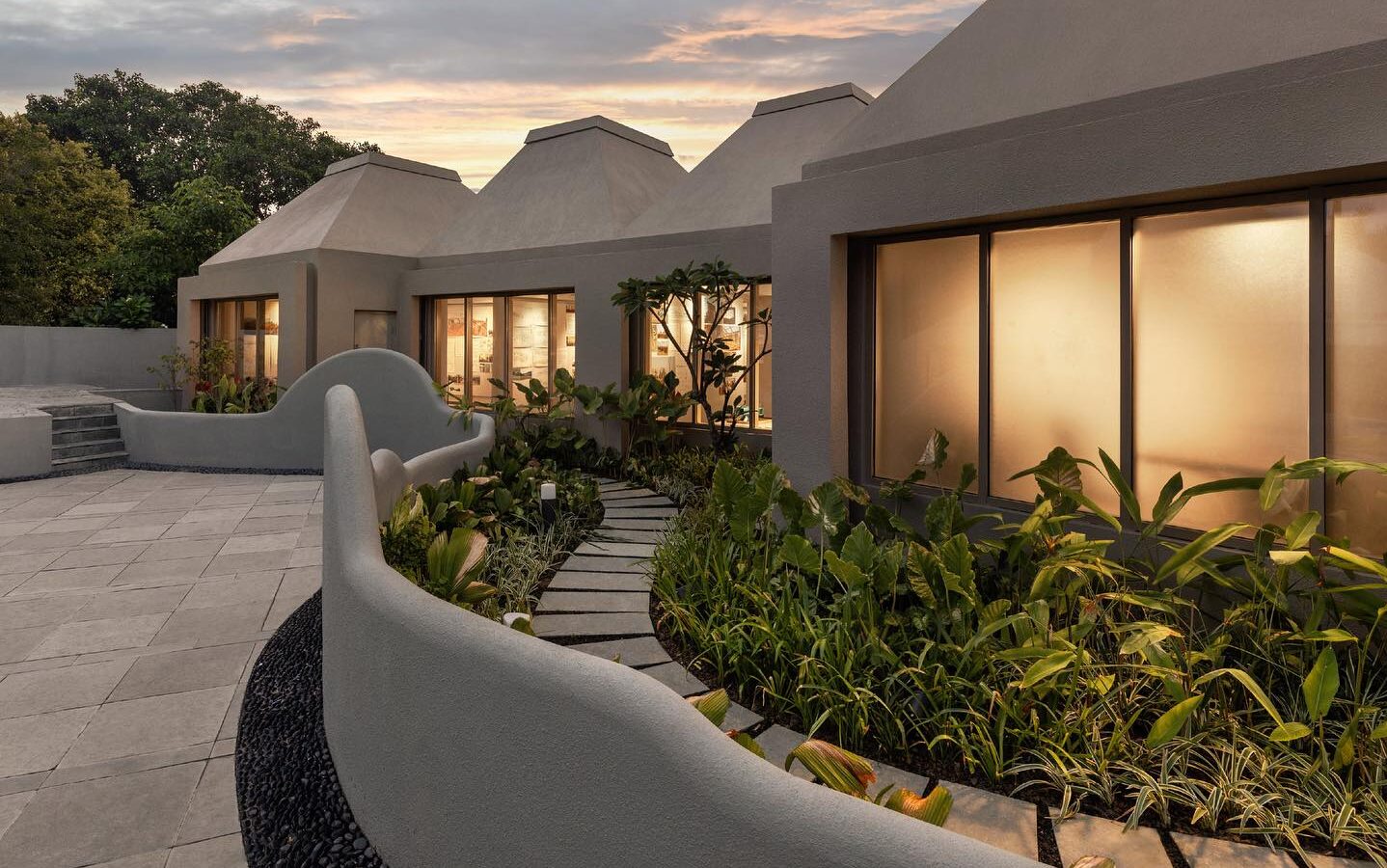
At first glance, the house appears almost reticent. There are no grand gestures shouting for attention. But spend a little time here and the thinking reveals itself. The L-shaped plan is not just a formal move. It is a response to light, wind, and the slow rhythm of living.
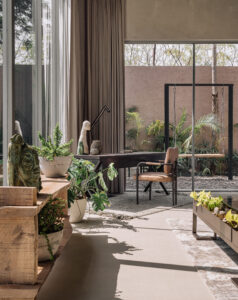
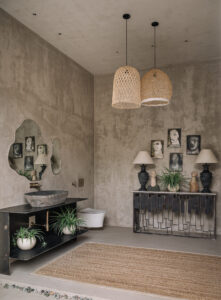
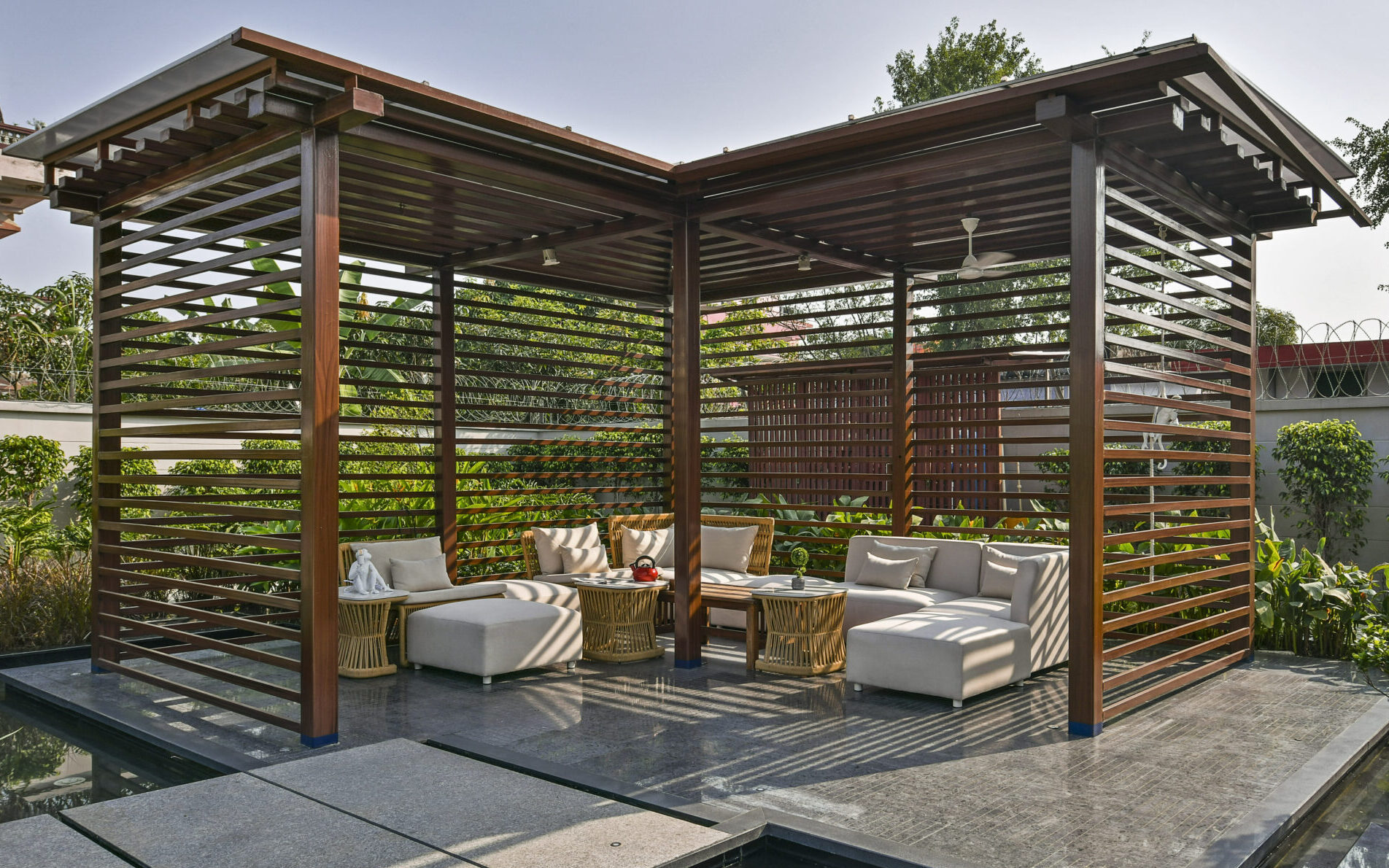
By opening itself along two axes, the home invites daylight to travel deeper, softens transitions between inside and outside, and frames the greens in a way that feels deliberate but never staged. The idea of blurring boundaries is often spoken about in architecture, but rarely executed with this level of quiet conviction. Here, there are no harsh thresholds. The living spaces flow outward without hesitation. You don’t step out into nature so much as ease into it. The open plan dissolves conventional divisions, allowing air, light, and movement to pass through uninterrupted. It creates a kind of spatial generosity that cannot be measured in square footage alone.
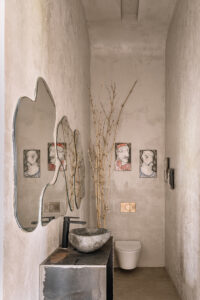
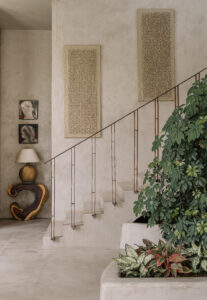
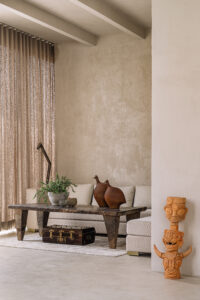
Inside, the palette holds back. Neutral greys settle across the walls and floors, creating a calm, almost meditative backdrop. The poured cement flooring anchors the space with a subtle coolness underfoot, its texture catching light differently through the day. Against this restraint, wood begins to speak. Not loudly, but with depth. Warm, tactile, and reassuring, it appears across furniture and details, grounding the interiors in something familiar and enduring.
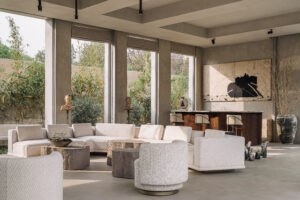
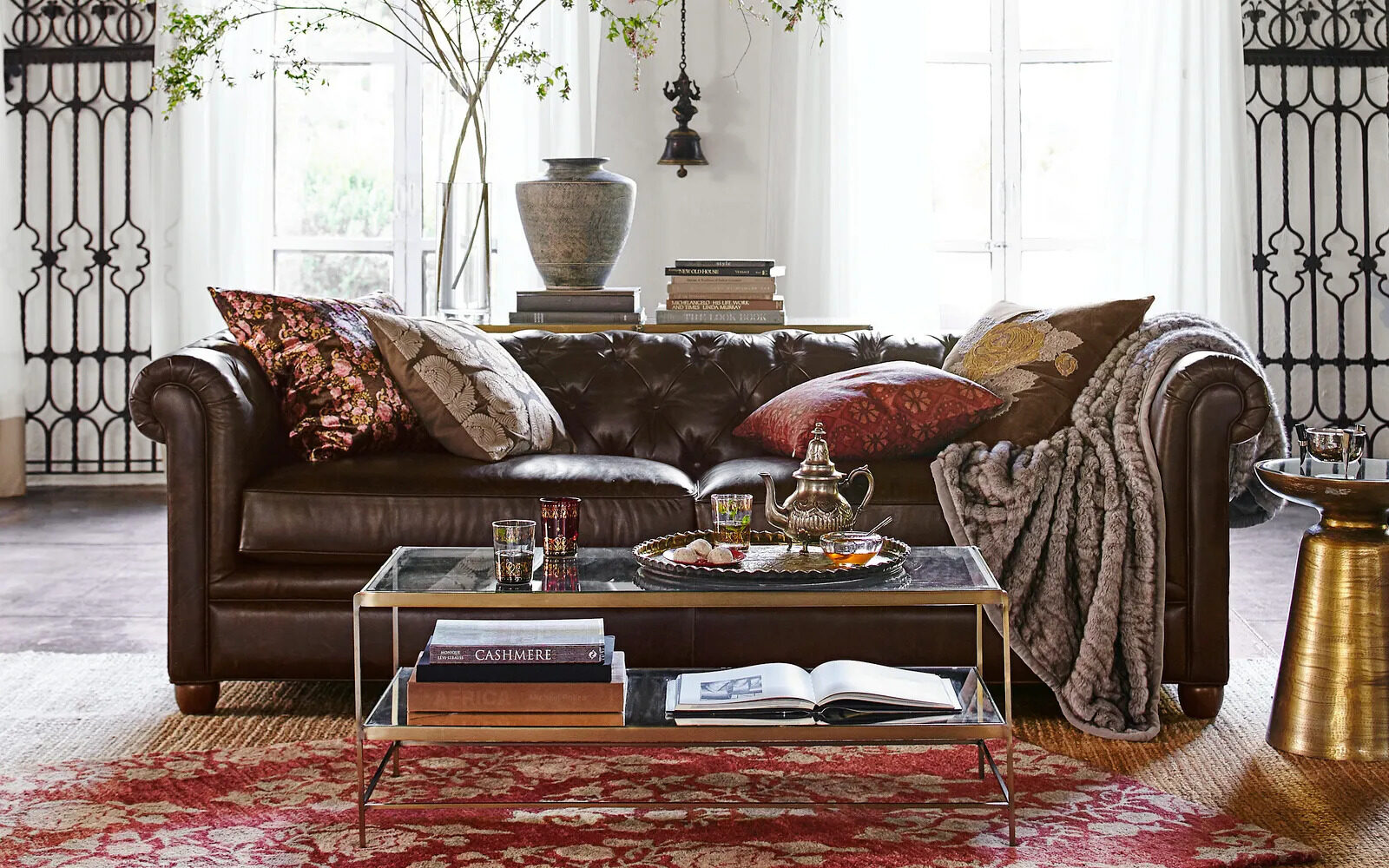
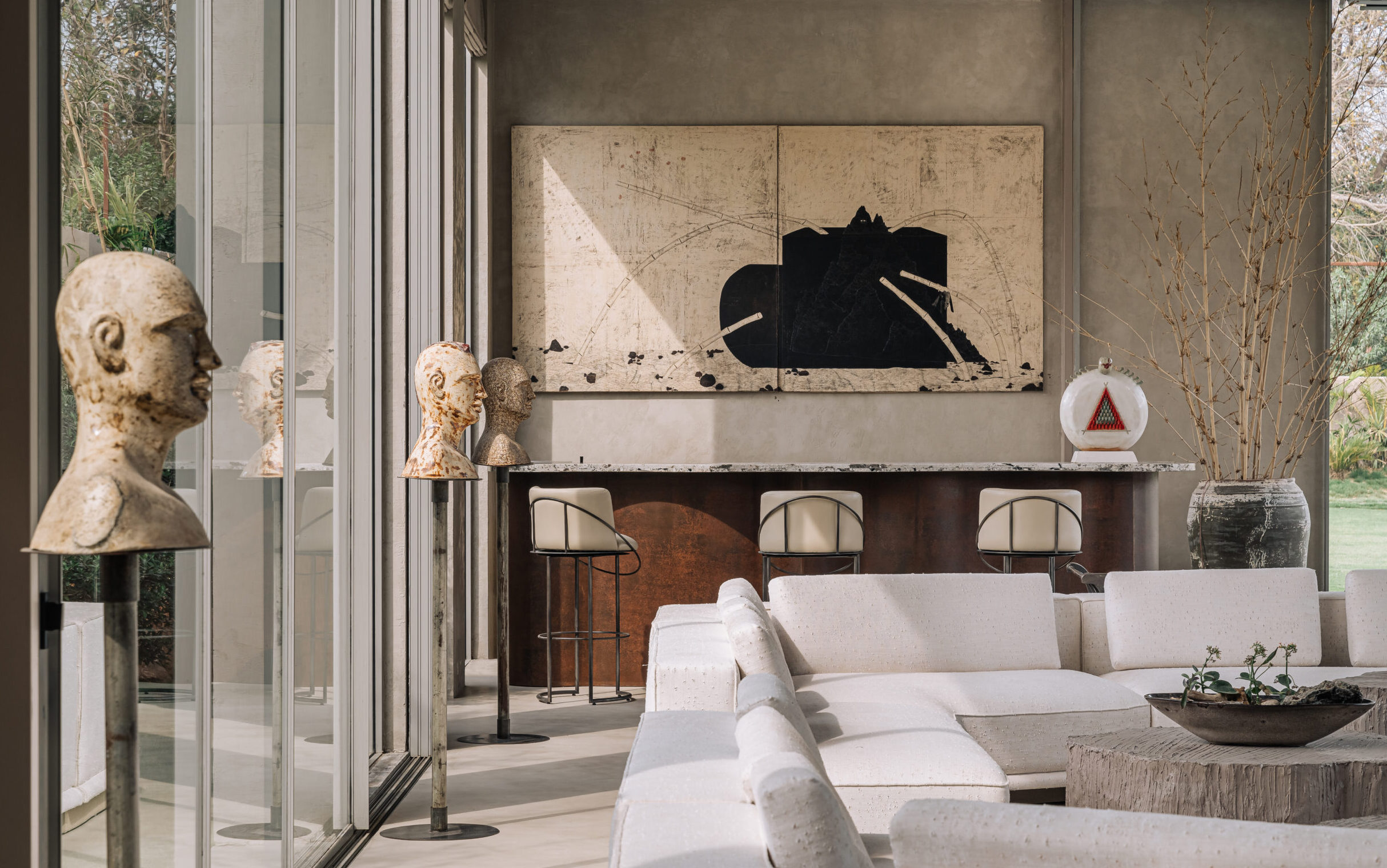
The living room captures this balance particularly well. It doesn’t try to impress with excess. Instead, it builds its character through layering. Plush linens invite you to sit a little longer. Boucle upholstered pieces add a softness that contrasts gently with the sharper lines of the cemented centre tables. White couches hold the room together, offset by rustic wooden tables that feel almost found rather than designed.
There is also a minimalist interpretation of the Tonic on Waves bar. It doesn’t dominate the room but quietly enhances it. Its presence feels considered, never performative, aligning with the overall mood of the house where everything has intent but nothing demands attention.
What makes the interiors particularly compelling is the way light has been treated as a primary material. Every room is planned with at least two sources of natural light. This is not just about brightness. It is about creating an interior that shifts through the day.
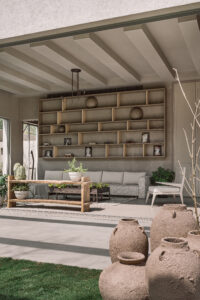
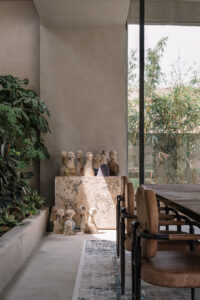
Morning light filters in softly. By afternoon, the same walls hold a different warmth. Corners that feel subdued at noon become luminous by evening. The house changes, almost imperceptibly, but constantly.
The staircase becomes a quiet highlight in this narrative. A skylight above it draws the eye upward, pulling in the sky as part of the experience. What could have been purely functional becomes a moment of pause. You move through the house, but you also look up, out, and beyond.
The dining area introduces one of the most striking elements of the home, and yet it sits comfortably within the larger design language. The suspended dining table is the pièce de résistance. Hung from the ceiling, it eliminates the need for legs, creating an unexpected lightness.
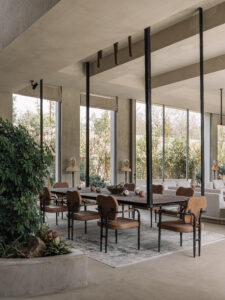
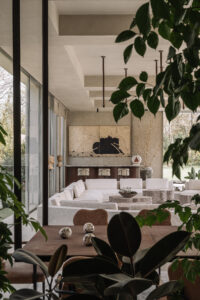
There is a certain theatre to it, but it is not loud. It feels engineered, thoughtful, and surprisingly natural within the context. The table’s deep brown metal finish, softened by subtle rusted undertones, carries a rawness that aligns with the home’s material palette.
Around it, eight leather chairs in a rich patina complete the setting. Their movable backs introduce an ergonomic intelligence that is often overlooked. They adjust to the body, inviting you to settle in rather than sit formally.
What elevates this space further is its relationship with the outdoors. Every seat offers a view. One moment you are looking out at the landscape, the next you are drawn to the indoor greens. Dining here feels less like a contained activity and more like an experience that extends beyond the table.
The bedrooms continue this narrative of restraint, each taking a slightly different approach while staying rooted in the same philosophy.
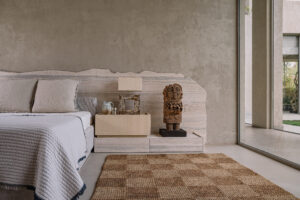
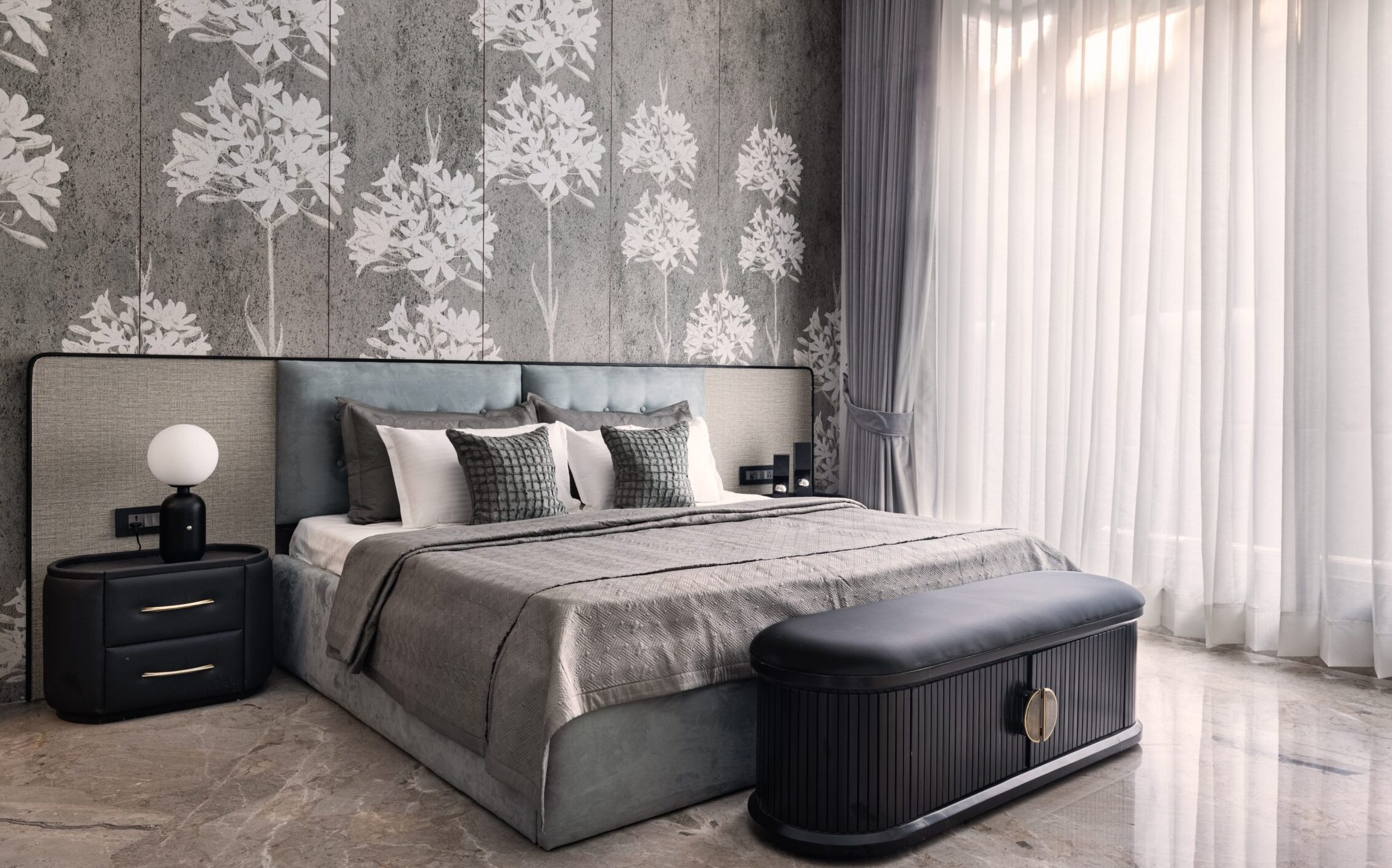
One bedroom moves away from conventional luxury. There is no excess here. A low wooden bed stretches across the room, its clean lines allowing the material to take focus. Integrated bedside tables feel like an extension rather than an addition. Opposite, a console with a stone façade introduces texture without ornamentation.
But it is the bed back that defines the room. Crafted from a broken slab of marble, it carries an unrefined beauty. Its edges are imperfect, softened just enough for comfort. It does not hide its origins. It celebrates them. There is something deeply tactile about this space. The boucle upholstery of the bed contrasts with the rawness of the marble, creating a sensory balance that feels both grounded and indulgent in its own quiet way.
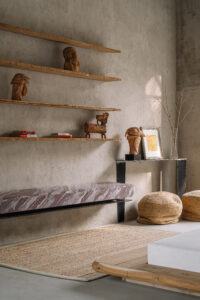
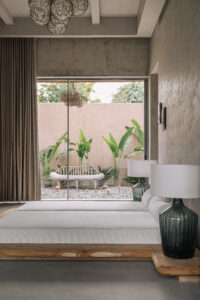
The second bedroom leans into a more familiar rustic language. A low wooden bed anchors the room, set against light grey walls that evoke the feeling of a stone house. Open wooden shelves, a simple floor mat, and a few artworks complete the space. It feels cocooned, yet open, with views of greenery that gently take over the experience. The third bedroom takes a lighter approach. A white bed and a soft couch sit within a space that feels almost weightless. There is very little in terms of furniture, but that is precisely the point. It offers a pause within the home, a place where visual noise is kept to a minimum.
What is perhaps most compelling about this residence is its refusal to overstate. In a time when homes often try to outdo one another, this one takes a different route. It steps back. It allows the landscape to lead.
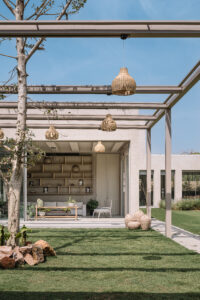
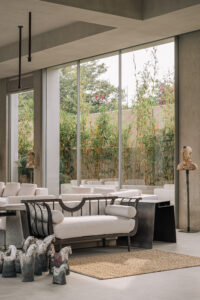
Every corner opens out, every room acknowledges what lies beyond its walls. The house does not frame nature as something to be admired from a distance. It invites it in, lets it move through, and becomes part of it.
This is not a home that seeks attention. It earns it slowly. Through the way light falls on a cement floor. Through the grain of wood against a quiet wall. Through a dining table that floats, not to impress, but to rethink how we gather.
In the end, what stays with you is not a single feature, but a feeling. A sense that this is a place designed with care, patience, and an understanding that true luxury is not always about what you add, but often about what you choose to leave out.