KOLKATA
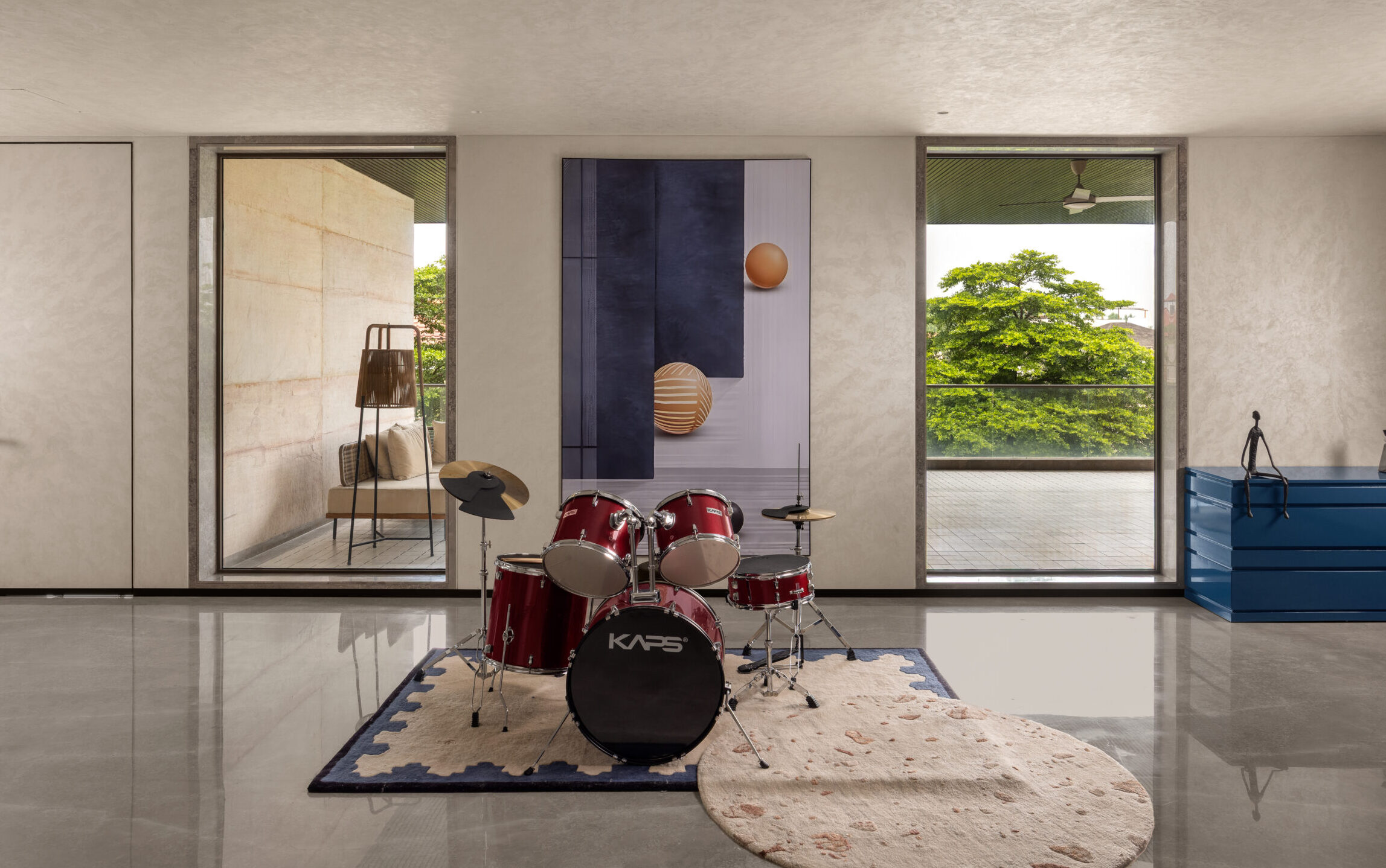
Minimalism has often struggled to find emotional depth inside Indian homes. Too often, it arrives looking severe, stripped down to the point of feeling distant. Beautiful in photographs, perhaps, but difficult to imagine living in every day. This sprawling 9 BHK residence designed by Azure Interiors takes a gentler route. It borrows the restraint of Japandi interiors but softens it through warmth, fluidity, and an unmistakably Indian sense of comfort.
The home unfolds like a slow exhale. Spaces move into one another with a flowing ease, creating interiors that feel expansive without becoming overwhelming. There is grandeur here, certainly, but it never appears loud or overstyled. Instead, the atmosphere is calm, composed, and deeply liveable.
What makes the residence remarkable is its understanding of balance. The architecture feels disciplined, yet never rigid. The interiors remain minimal, but never cold. Every room seems designed to create stillness without sacrificing emotion.
Designing a large family home often comes with the temptation to overdefine spaces. Formal zones become too formal. Private rooms become disconnected. Common areas lose intimacy because of scale. Here, the planning feels far more intuitive. The layout flows naturally between public and private areas, creating a rhythm that feels effortless. Shared spaces remain visually connected, allowing conversations and movement to travel freely through the house, while quieter zones gently curve away into privacy.
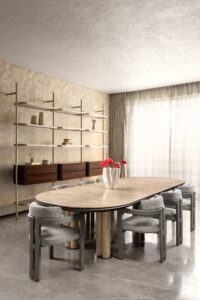
This fluidity becomes one of the home’s strongest design features. Corridors do not feel like transitional afterthoughts. Openings are strategically placed to pull natural light deeper into the interiors, while circulation pathways create a sense of softness throughout the residence. Even within its vast footprint, the home avoids feeling intimidating. Instead, it feels layered and personal, shaped around the everyday movements of a large family.
Japandi design is rooted in simplicity, functionality, and warmth. It combines the quiet discipline of Japanese interiors with the comfort-driven sensibility of Scandinavian spaces. But translating that language into an Indian context requires sensitivity.
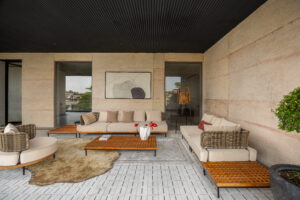
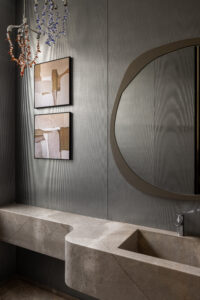
This home understands that restraint alone cannot create warmth. Instead of relying on ornamentation, the interiors build richness through tactile materials and subtle layering. Wood softens stone. Muted metallic accents add depth without stealing attention. Glass surfaces reflect light gently, allowing rooms to feel airy and open.
The palette remains warm and understated, moving through soft neutrals, earthy beige tones, pale taupes, and creamy whites. The absence of harsh contrast allows textures to emerge naturally, creating spaces that feel soothing rather than visually demanding.
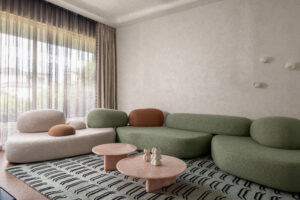
There is also a noticeable softness to the design language. Nothing feels sharp or aggressively geometric. Furniture edges appear refined and relaxed. Spatial transitions feel curvy and organic rather than abrupt. The entire house carries a flowing visual rhythm that makes the minimalism feel more human.
Natural light shapes the mood of the home as much as the materials themselves. Throughout the day, sunlight filters softly through carefully positioned openings, changing the emotional tone of the interiors hour by hour.
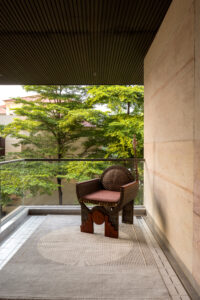
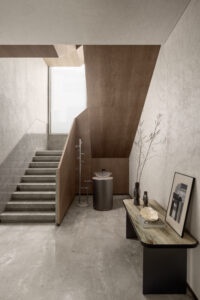
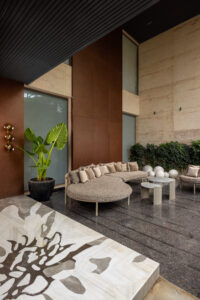
Morning light brightens the neutral palette, making rooms feel weightless and open. By evening, the atmosphere becomes warmer and more cocooned, with integrated lighting gently accentuating textures and material transitions. The lighting strategy is particularly restrained. Instead of dramatic statement fixtures, illumination is layered subtly across the interiors. Walls glow softly. Surfaces gain quiet dimension. Corners feel intimate rather than shadowed.
This sensitivity to light gives the residence its emotional depth. Minimal spaces often risk feeling flat, but here, shifting light constantly reshapes the interiors, making them feel alive.
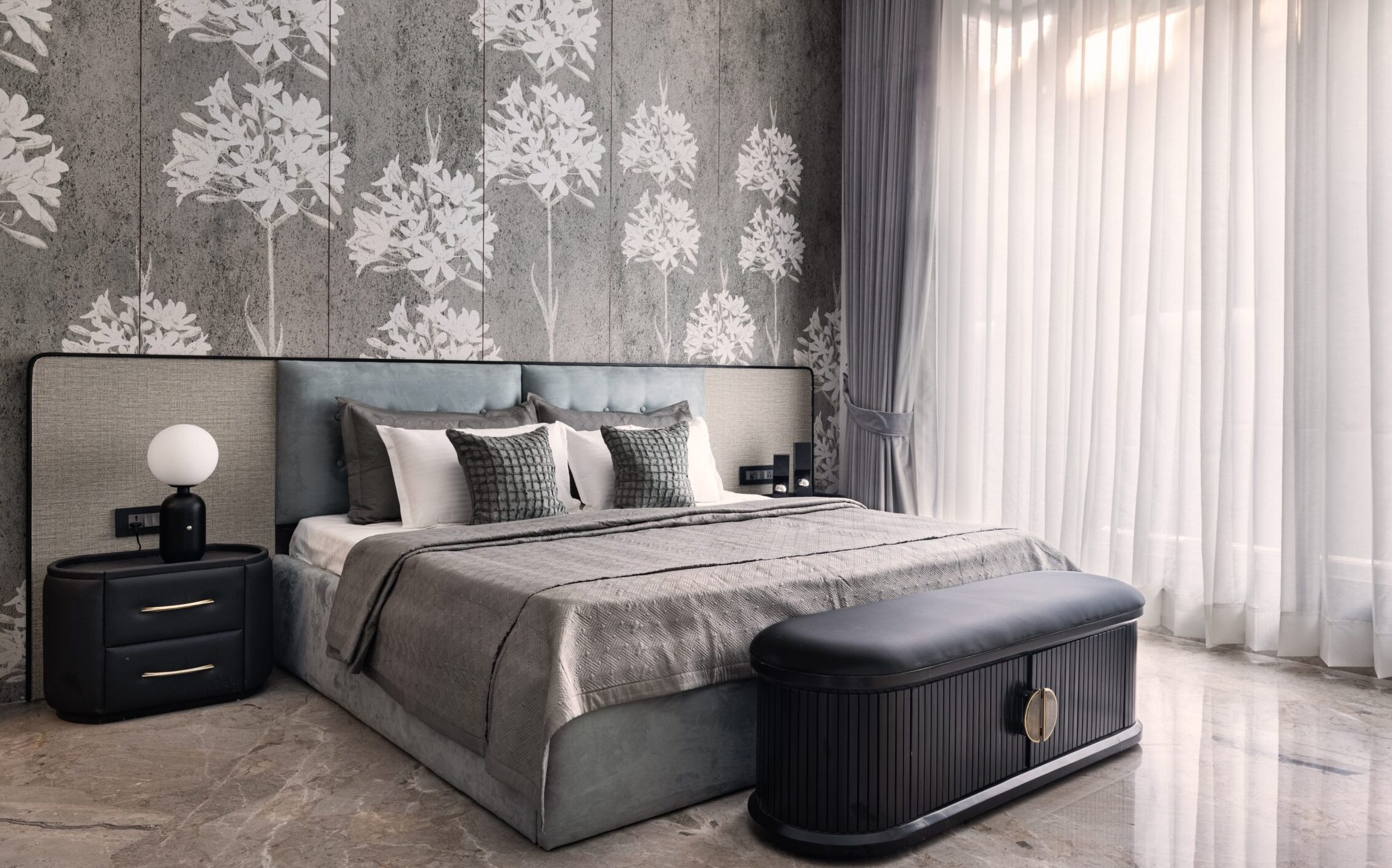
Large minimal homes can sometimes become repetitive, with too much visual restraint creating emotional distance. This residence avoids that entirely by introducing warmth through materiality and spatial softness. The bedrooms, especially, feel deeply calming. Conceived as private sanctuaries, they prioritise comfort over spectacle. Layered textures, muted finishes, and uncluttered layouts create rooms that encourage rest rather than performance.
There is a quiet confidence to these spaces. Nothing demands attention immediately. Instead, the details reveal themselves gradually. A subtle grain in the woodwork. The softness of a fabric finish. The way lighting settles across stone surfaces at night.
Even the furniture contributes to this atmosphere of ease. Custom-designed pieces and carefully sourced international elements blend seamlessly into the architecture, reinforcing the home’s flowing aesthetic rather than interrupting it.
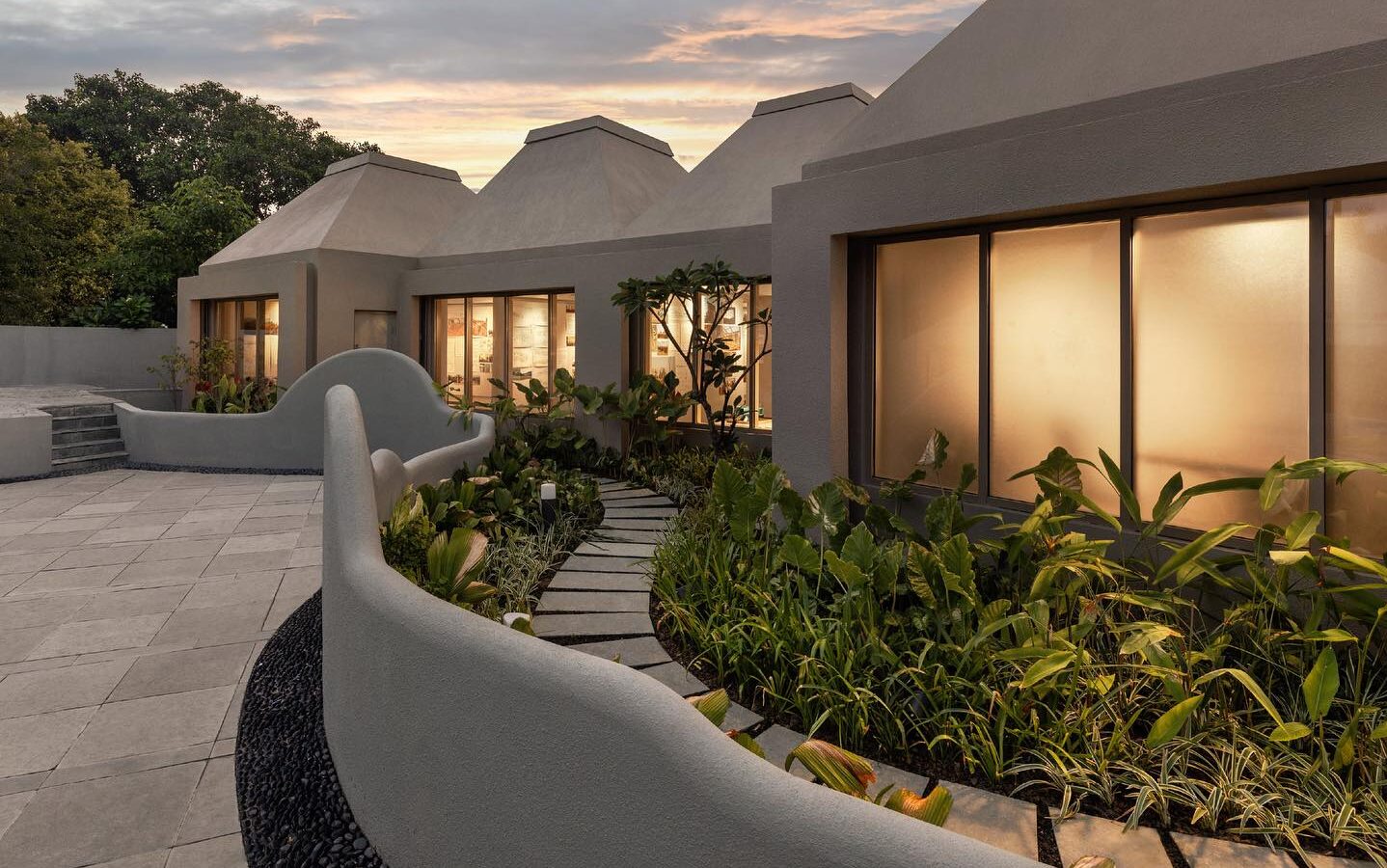
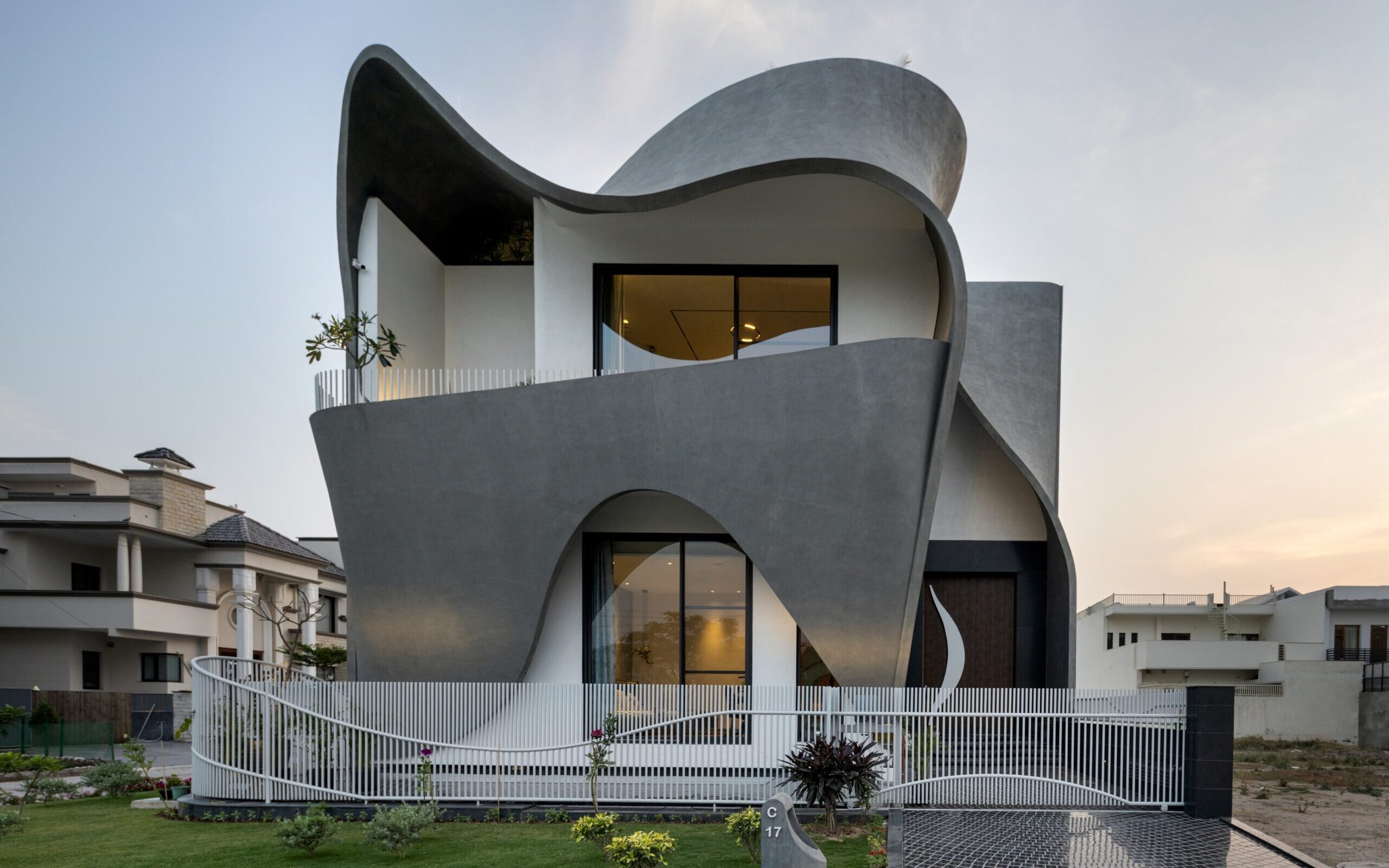
The exterior introduces a slightly sharper architectural character through the use of metallic sheets across the façade, particularly around the dramatic double-height elevation. Yet even this gesture remains refined.
Rather than creating visual heaviness, the metallic detailing adds structure and rhythm to the exterior composition. The architecture still feels restrained, allowing proportion and material balance to take precedence over ornament. Inside, the calm continues uninterrupted. Storage remains concealed. Detailing stays clean. Circulation paths feel intuitive. Every decision appears guided by the idea of intentional living.
This is perhaps where the home feels most contemporary. Luxury is no longer expressed through excess. It is expressed through clarity. What this residence ultimately achieves is a new interpretation of grandeur for Indian homes. It proves that spaciousness does not require visual noise, and that minimalism can still feel deeply emotional.
The house respects the realities of Indian family life while embracing the serenity of Japandi philosophy. It understands togetherness, hospitality, privacy, and comfort. More importantly, it understands that true luxury often lies in how a space makes you feel rather than how loudly it announces itself.
In a design landscape increasingly dominated by spectacle, this home chooses softness instead. Flowing spaces. Curated restraint. Warm textures. Gentle light. A sense of calm that lingers long after one leaves. And perhaps that is what makes it unforgettable.